Last updated
Overview
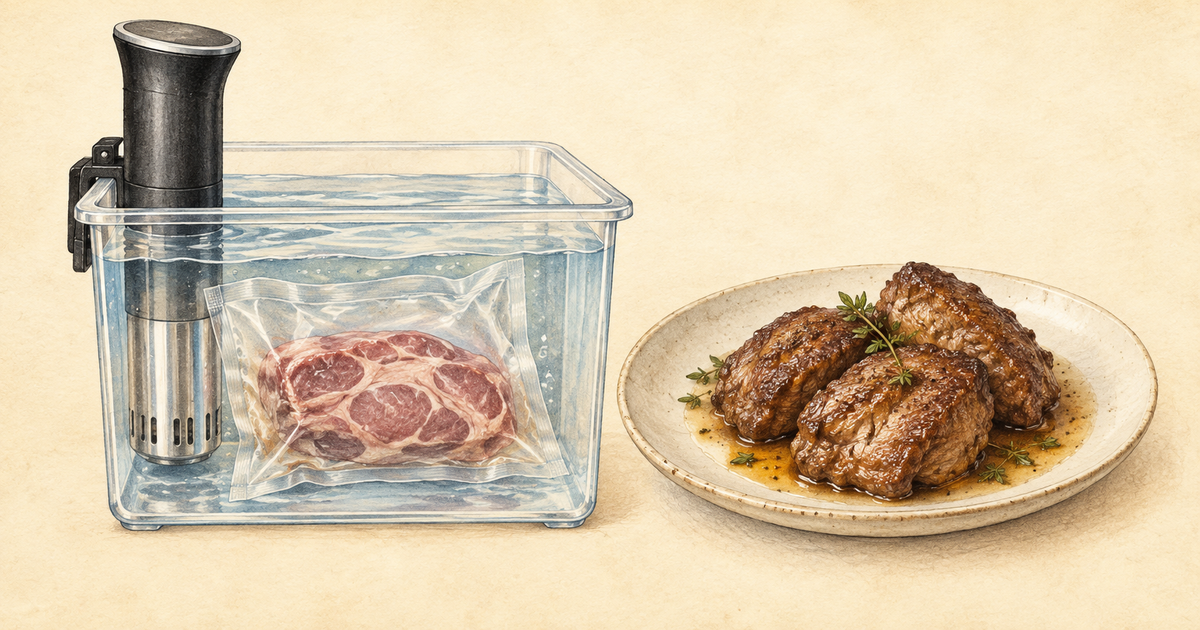
Pork cheeks are small, hardworking muscles with connective tissue that softens during a long bath. Trim the outer membrane and bag them as individual pieces so you can check each one after cooking. The hotter bath follows Graham Campbell's sous vide cheek method. A clean cider, stock, or mustard sauce adds brightness without hiding the pork's rich texture.
Time and temperature
Swipe to see all columns
| Texture | Bath setting | Check before serving | Cook time |
|---|---|---|---|
| Braise-Tender | 176°F | 145°F | 6 hours |
Trimmed individual pork cheeks in one layer; the original recipe uses 1 kilogram in total. Start timing when the bag enters the fully heated circulating bath. The bath begins the cook. Follow the thermometer check in Cook safely, using additional heat when needed before the final finish.
Choose your texture
- 176°FBraise-Tender
- The cheeks become soft enough for a fork while remaining separate pieces on the plate.
Best for
- Trimmed individual pork cheeks in one layer; the original recipe uses 1 kilogram in total.
Get it ready
- Trim thick outer membrane and loose fat from the cold cheeks.
- Prepare any wine or cider braising liquid separately and chill it thoroughly before adding it to the meat.
- Arrange the cheeks in one layer with a little chilled braising liquid. Divide between bags rather than piling them up.
- Seal, place in the fully heated circulating bath, and start the listed time. Keep the bags submerged and check the water level.
Finish and serve
- Transfer the cheeks to a clean plate and discard the liquid from the bags.
- Check the center of every cheek at 145°F or hotter. Continue cooking and recheck any cooler piece.
- Pat the surface dry and brown gently, then add a separately made hot sauce.
- Rest for at least 3 minutes after the final heat. Serve the cheeks whole or cut them after resting, and eat immediately.
Useful tips
- Choose cheeks of similar size when buying so they soften at a similar pace.
- Use a broad spoon when lifting the cooked meat; tongs can tear it.
- A little mustard or vinegar in the clean finishing sauce cuts through the richness.
Common problems
- A tough layer remains outside
- The cheek's outer membrane was left in place. Trim the membrane before bagging; avoid digging into the muscle itself.
- The cheeks break up in the pan
- Soft meat was turned too often. Brown one broad face, turn gently, and spoon the sauce over rather than stirring.
Questions
QAre pork cheeks the same as jowl?
QCan I use a sweet glaze?
QDoes this include overnight bag storage?
Cook safely
Use fully thawed, refrigerator-cold whole pieces of meat; this guide does not cover ground, injected, mechanically tenderized, stuffed, or rolled meat.
Insert the thermometer into the thickest center of every cheek, avoiding fat and gristle; check multiple places in any uneven piece. Each measured spot must reach 145°F before the final browning or sauce.
If a spot is cooler, continue cooking in a skillet or oven and check again. A bath below that temperature needs a hotter cooking step; the timer alone cannot make it ready to eat.
Rest for at least 3 minutes after the last heat before slicing, pulling, or serving. Use clean utensils, discard bag liquid, and serve immediately. These instructions do not cover chilling, storage, reheating, or hot holding.