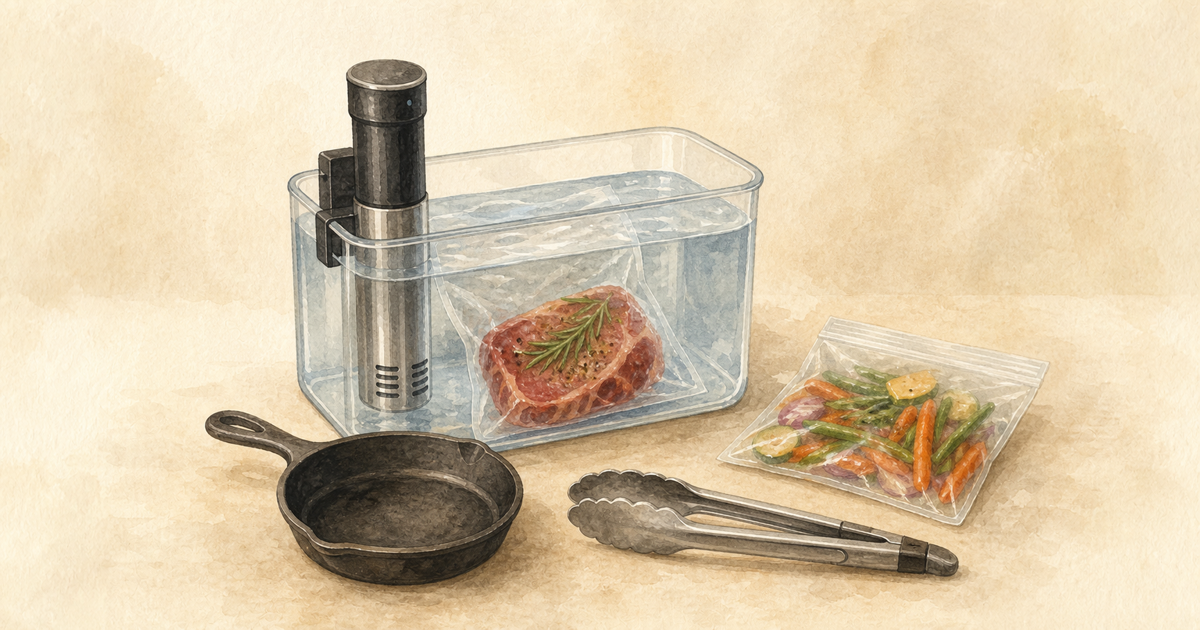
How it works
- Fill a pot or container, attach the circulator, and set the temperature that suits the food and the plate.
- Season the food, seal it in a food-safe bag, and keep the bag submerged while the bath brings the center to the right texture.
- Pat the food dry, then finish with high heat for browning, crust, and a sauce-ready surface.
What you need
The starter kit is modest: a circulator, a container, food-safe bags, and something hot for finishing, such as cast iron, a grill, or a broiler.
A vacuum sealer earns its place on long cooks, irregular shapes, and foods that want to float. For a short cook, water displacement usually does the job.
Bagging short and long cooks
Freezer-weight zip-top bags work for many short cooks. Use water displacement to push out air, seal most of the bag, lower it into the bath, then seal fully.
Vacuum bags are useful for long cooks, freezer prep, irregular shapes, and foods that tend to float. Double-bag very long or high-value cooks if a leak would ruin the batch.
Best first cooks
Ribeye, chicken breast, and salmon make good first cooks: the center cooks evenly, the texture is easy to read, and a hot pan does the rest.
Start simple
- Use a stock pot or modest heat-safe container until cooking volume proves you need something larger.
- Skip expensive branded bags when reliable food-safe freezer or vacuum bags do the same job.
- Add racks, weights, torches, and app-connected extras only when they solve a problem you run into more than once.