Last updated
Overview
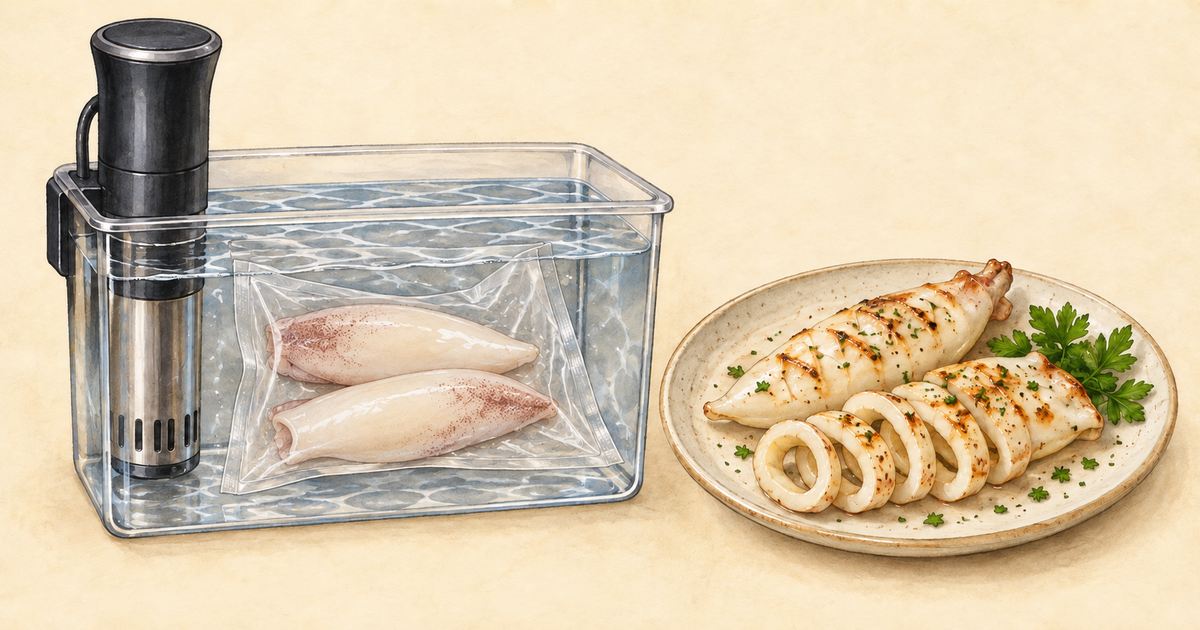
Squid bodies can tighten quickly over high heat. A gentle bath starts the cook, then a hotter step brings the thickest flesh to the thermometer reading in Cook safely before the final char.
This guide follows Christina Wylie's method for cleaned 4-ounce bodies. Keep the bodies whole until the measured check is complete, then slice and dress just before serving.
Time and temperature
Swipe to see all columns
| Texture | Bath setting | Check before serving | Cook time |
|---|---|---|---|
| Tender Bodies | 136.4°F | 145°F | 2 hours |
Cleaned 4-ounce squid bodies kept flat and separate; stuffed squid and mixed sizes are excluded. Start timing when the bag enters the fully heated circulating bath. The bath begins the cook. Follow the thermometer check in Cook safely, using additional heat when needed before the final finish.
Choose your texture
- 136.4°FTender Bodies
- The body softens in the bath before a measured hot cook and brief sear.
Best for
- Cleaned 4-ounce squid bodies kept flat and separate; stuffed squid and mixed sizes are excluded.
Get it ready
- Use fully thawed, cleaned squid bodies with the innards, quill, and outer membrane removed.
- Pat dry, season lightly, and keep cold while the bath heats.
- Lay each body flat in its own bag with a little olive oil. Do not stuff, fold, or stack the bodies.
- Seal gently, place in the fully heated circulating bath, and start the listed time.
Finish and serve
- Lift each body onto a clean plate and discard its bag liquid.
- Continue cooking in a skillet until a fine-tip thermometer in the thickest flesh reads 145°F for at least 15 seconds. Check every body before slicing; if reliable measurement is not possible, use a different method written for that preparation.
- Dry the surfaces and add a quick final char in a hot pan.
- Slice the bodies, toss with freshly prepared garlic-parsley oil and lemon, and serve immediately.
Useful tips
- Prepare the clean finishing oil while the squid cooks, keeping it separate from raw seafood.
- Check the bodies before cutting them into rings; small pieces are harder to probe.
- Dry the squid and use space in the pan to encourage browning instead of steaming.
Common problems
- The squid becomes rubbery
- The final high-heat cooking continued too long. Use the thermometer during cooking and keep the additional browning brief once the check is complete.
- The thermometer cannot get a reliable reading
- Its sensing area is larger than the squid flesh. Use a fine-tip food thermometer. Do not treat white color or a curled edge as a substitute.
Questions
QDoes this method cover stuffed squid?
QCan I use the same time for tentacles?
QCan squid be judged by whether it flakes?
Cook safely
Start with fully thawed, refrigerator-cold seafood and keep it separate from ready-to-eat food.
Use a fine-tip thermometer to check the center of the thickest flesh of every squid body from the side; keep the sensing area inside the flesh and recheck uneven areas.
Every measured spot must reach 145°F for at least 15 seconds before the final sear, sauce, or serving. If a spot is cooler, continue cooking in a skillet or oven and check it again.
A bath below that temperature needs a hotter cooking step; the timer alone cannot make it ready to eat. Use a suitably sized thermometer; color, tenderness, and flaking do not replace the check here. Serve immediately.
This guide does not cover undercooked service, chilling, storage, reheating, or hot holding.