Last updated
Overview
Scallops need a short, gentle cook and a very dry surface. Sear them in a hot skillet just long enough to build a golden crust.
Time and temperature
Swipe to see all columns
| Texture | Bath setting | Check before serving | Cook time | Longest time |
|---|---|---|---|---|
| Tender | 122°F | 145°F | 30 minutes | 45 minutes |
| Firm | 130°F | 145°F | 30 minutes | 45 minutes |
Choose the time that matches the texture you want. Start timing when the bag goes into the fully heated water bath, and read the Cook safely section before serving.
Choose your texture
- 122°FTender
- Butter-tender in the center, ready for a hard, fast sear.
Best for
- Dry scallops
- U-10 or U-12 size
Notes
- Use dry scallops, not wet (soaked in preservatives).
- Pat completely dry before searing.
Tips
- Remove side muscle (small tough tag) before cooking.
- Season lightly — scallops are naturally sweet and delicate.
- Sear in smoking-hot cast iron for 30 seconds per side maximum.
- 130°FFirm
- A firmer, springier bite that still stays juicy.
Best for
- Skewers
- Salads
Notes
- Great for adding to pasta or grain bowls.
- Works well with bold sauces.
Tips
- Still sear briefly to add color and texture contrast.
- Season assertively — firmer texture can handle bolder flavors.
Get it ready
- Remove the small side muscle from each scallop and pat the scallops completely dry.
- Season with salt and white pepper.
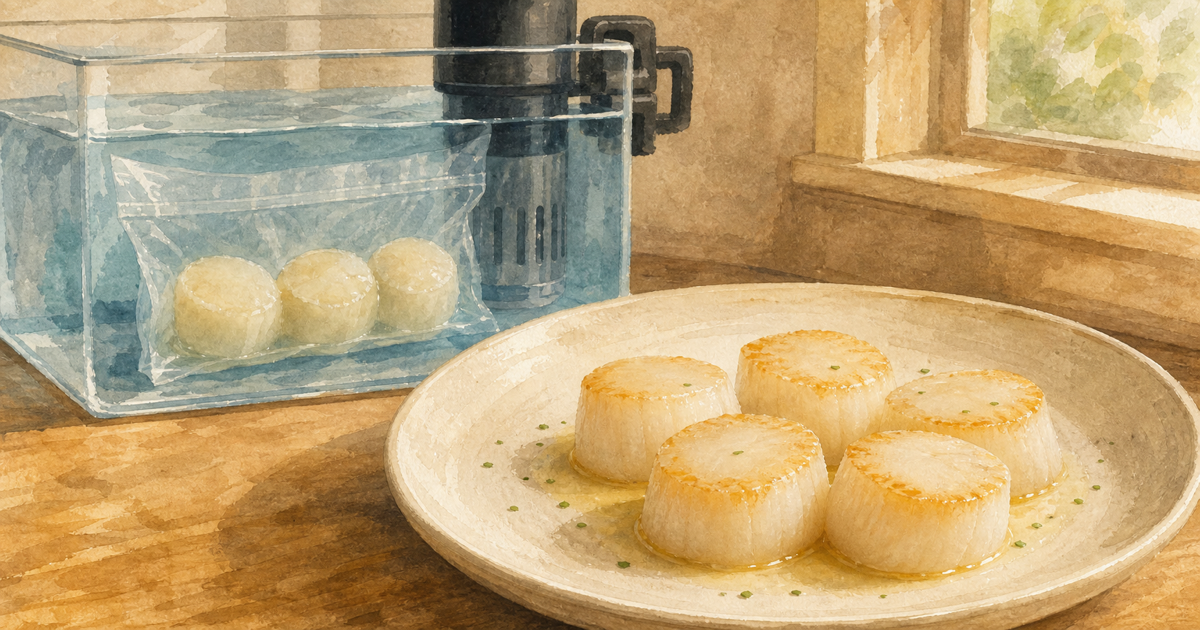
- Arrange the scallops in one flat layer with a little butter or oil, then seal.
Finish and serve
- Take the scallops out of the bag and pat them completely dry.
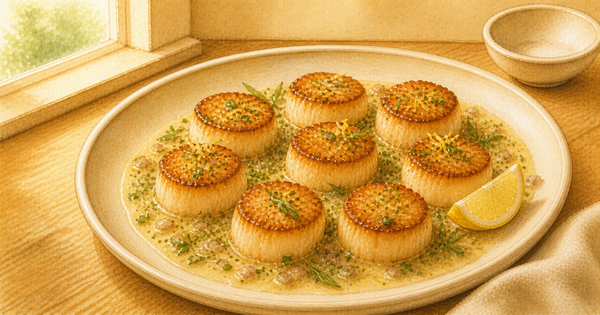
- Sear in a very hot skillet just long enough to build a golden crust.
- Serve with brown butter, citrus, or a light pan sauce.
Useful tips
- Pat the scallops bone-dry before searing or you'll never get a crust. Sous vide scallops come out wetter than raw ones, and even a drop of moisture on the surface means a steamed crust instead of a seared one. Two rounds of paper towels, then air-dry for 5 minutes.
- Use 'dry-pack' scallops, never 'wet-pack.' Wet-pack scallops are soaked in sodium tripolyphosphate which makes them retain water — they'll release liquid in the bag and never crust properly in the sear. Dry-pack are more expensive but worth every penny.
- Sear in clarified butter or avocado oil over the highest heat. Regular butter burns at the temperature you need for proper scallop searing. Sear 30 seconds per side, no more. The interior is already at temperature, so you're only browning the surface.
- Anti-tip: don't move scallops while searing. The crust forms in the first 30 seconds, and moving them or pressing them prevents the Maillard browning from setting. Drop them in the pan, walk away for 30 seconds, flip with one motion, walk away again.
Questions
QTender: What are dry vs wet scallops?
QTender: How do I get a good sear?
QTender: Can I cook scallops from frozen?
QFirm: Will firmer scallops be rubbery?
QFirm: Can I use bay scallops?
QFirm: What sauces pair well?
Cook safely
Before serving, check the center of each scallop with a food thermometer. It should hold at 145°F for at least 15 seconds. For a thin piece, slide the thermometer in from the side so the sensing part reaches the center.
Only when an individual scallop cannot be reliably probed with an appropriately sized food thermometer, cook it until milky white or opaque and firm. A translucent center does not meet this check.
This is not a measured temperature check or a pasteurization method. If you plan to serve it undercooked, or cool and reheat it later, use a method written for that purpose. Otherwise, serve it right away.
Cook with this guide
Recipes using this guide
Each recipe inherits a reviewed bath setting and cook time from the Scallops guide.