Last updated
Overview
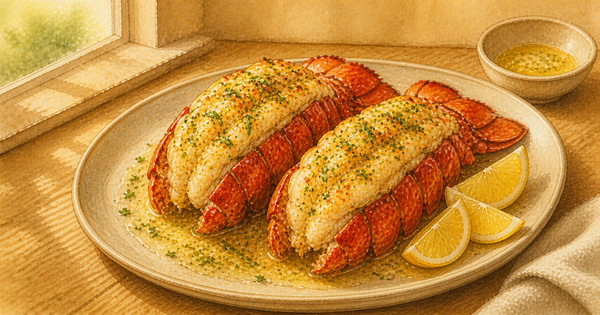
Cook lobster tails and claws as separate pieces so each one stays tender. Finish with warm butter, lemon, and herbs, or give the meat a very quick broil.
Time and temperature
Swipe to see all columns
| Texture | Bath setting | Check before serving | Cook time | Longest time |
|---|---|---|---|---|
| Butter-Poached | 135°–140°F | 145°F | 25 minutes | 45 minutes |
| Firm | 145°F | 145°F | 25–30 minutes | 45 minutes |
Choose the time that matches the texture you want. Start timing when the bag goes into the fully heated water bath, and read the Cook safely section before serving.
Choose your texture
- 135°–140°FButter-Poached
- Supple tail and claw meat with a buttery, yielding bite.
Best for
- Cold-water lobster
Notes
- Add butter or beurre monté to the bag for flavor.
- Finish with a quick broil or torch to warm the surface.
Tips
- Use kitchen shears to cut the top of the shell before cooking so you can baste and finish easily.
- Add a teaspoon of white wine or vermouth to the bag for aromatics without diluting flavor.
- Torch lightly after broiling to re-crisp any soft spots on the shell.
- 145°FFirm
- Firm enough for clean slices, a warm roll, or a quick broil.
Best for
- Rolls
Notes
- Chop only after the thermometer reading and assemble immediately.
- Use clean butter or sauce for the finish and discard juices in the bag.
Tips
- Use clean melted butter to toast split-top buns before filling lobster rolls.
Get it ready
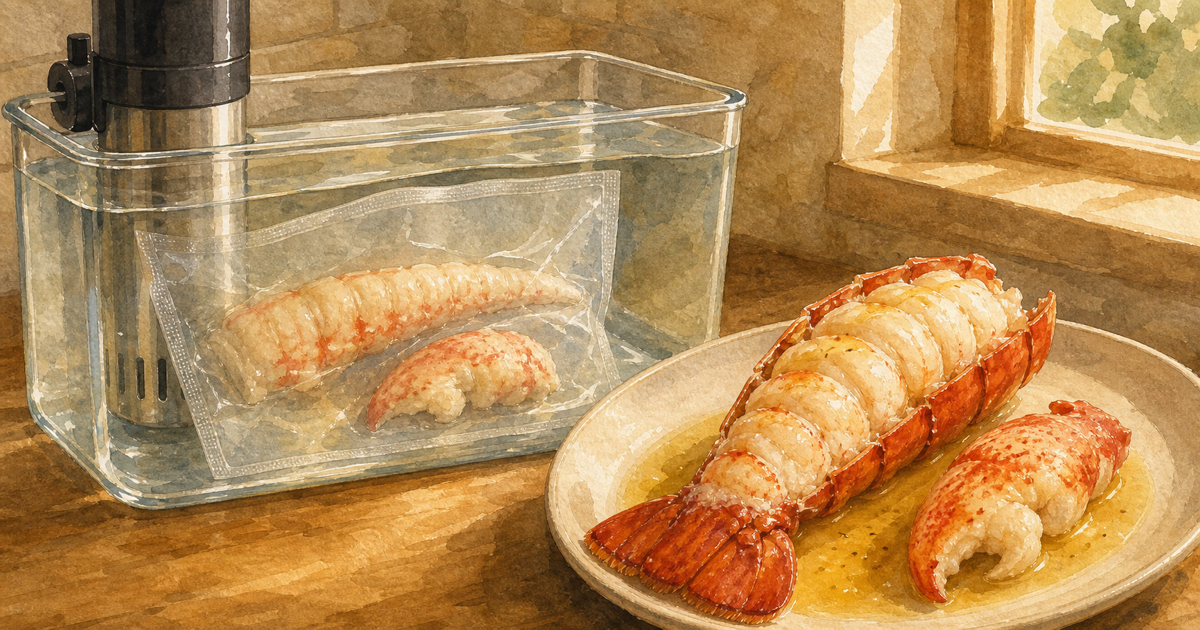
- Cut the top shell with kitchen shears and loosen the tail meat without tearing it.
- Separate the claws from the tails so each piece can cook evenly.
- Add a little butter, vermouth, or herbs and seal the lobster in one flat layer.
- Keep every piece fully submerged while it cooks.
Finish and serve
- Lift the tails and claws from the bag and pat them dry.
- Warm the meat in beurre monté, or give it a very quick broil for color.
- Finish with lemon and herbs, then serve.
Useful tips
- Lobster tails at 135°–140°F produce the most butter-tender texture possible. Traditional boiling at 212°F toughens the protein in seconds. Sous vide gives you a wide window of doneness that boiling cannot match.
- Butterfly the tails before bagging for even cooking and easier extraction. Cut through the top shell with kitchen shears and pull the meat partially out, resting it on top.
- Add a tablespoon of butter to each bag. Lobster is naturally lean and the butter infuses during cooking, giving you built-in butter-poached lobster.
- The finishing step is optional but beautiful — a quick 30-second sear in clarified butter adds color without overcooking the delicate interior.
Questions
QButter-Poached: Do I need to par-cook before sous vide?
QButter-Poached: How do I reheat leftovers?
QButter-Poached: Can I cook whole lobster?
QFirm: How do I keep firm lobster from turning rubbery?
QFirm: Can I meal prep lobster?
QFirm: What sauces pair best?
Cook safely
Before serving, check the thickest part of every piece of lobster with a food thermometer. It should hold at 145°F for at least 15 seconds. For a thin piece, slide the thermometer in from the side so the sensing part reaches the center.
Only when an individual piece cannot be reliably probed with an appropriately sized food thermometer, cook that piece until firm, pearly, and opaque. This is not a measured temperature check or a pasteurization method.
If you plan to serve it undercooked, or cool and reheat it later, use a method written for that purpose. Otherwise, serve it right away.
Cook with this guide
Recipes using this guide
Each recipe inherits a reviewed bath setting and cook time from the Lobster guide.