Last updated
Overview
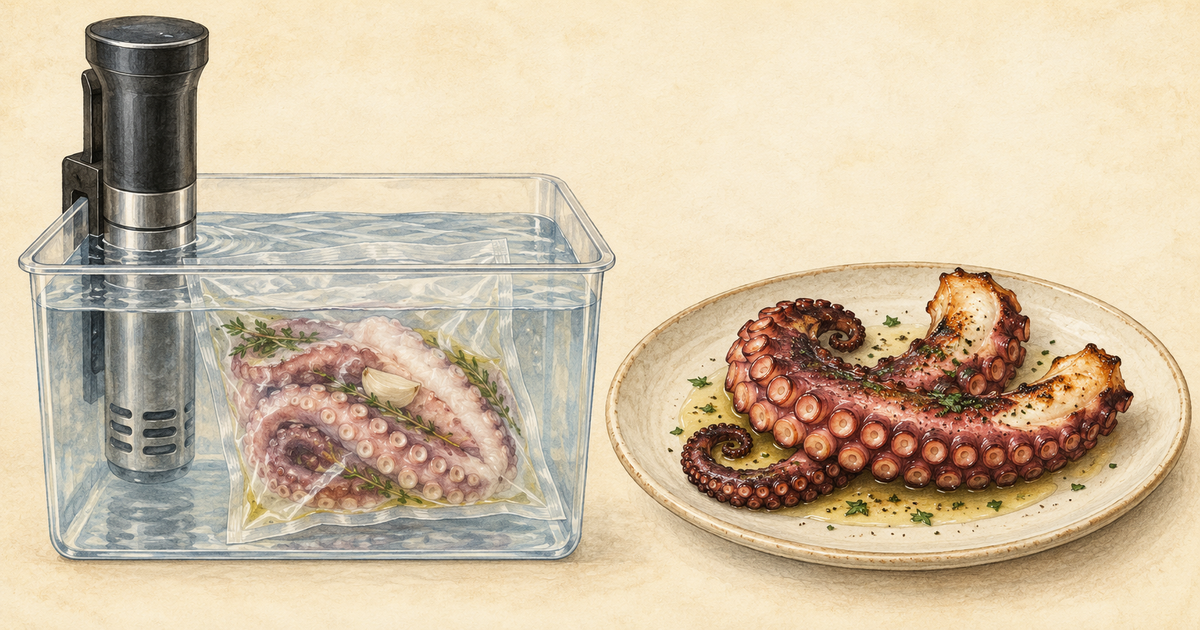
Octopus needs time for its thick muscle to soften before a quick sear can add contrast. This guide follows the Great British Chefs tentacle method: clean the octopus, remove the head, and bag the tentacles with olive oil.
Tenderness varies with size, so use the listed bath as a starting cook and check the thickest flesh with a thermometer. Serve it hot after browning rather than storing it in the bag.
Time and temperature
Swipe to see all columns
| Texture | Bath setting | Check before serving | Cook time |
|---|---|---|---|
| Tender Tentacles | 172.4°F | 145°F | 5 hours |
Cleaned octopus tentacles with the head and beak removed, arranged in one layer. Start timing when the bag enters the fully heated circulating bath. The bath begins the cook. Follow the thermometer check in Cook safely, using additional heat when needed before the final finish.
Choose your texture
- 172.4°FTender Tentacles
- The tentacles soften through the bath, with crisp edges added in the skillet.
Best for
- Cleaned octopus tentacles with the head and beak removed, arranged in one layer.
Get it ready
- Buy cleaned octopus or have the fishmonger remove the head, innards, and beak. Start with fully thawed tentacles.
- Rinse away debris, pat dry, and keep cold until bagging.
- Season and arrange the tentacles in one layer with a little olive oil. Separate bulky clusters rather than stacking them.
- Seal in heat-rated bags, submerge in the fully heated bath, and start the listed time. Keep the water level above the food.
Finish and serve
- Open the bags with clean tools, move the tentacles to a clean tray, and discard the liquid.
- Measure the thickest center of every tentacle and hold each measured spot at 145°F or hotter for at least 15 seconds. Keep cooking and recheck any low reading.
- If the meat still resists a skewer after the thermometer check, finish gently in a covered pan until tender. Dry the outside well before searing.
- Sear the tentacles in a hot pan, then cut for serving and add fresh lemon, herbs, or paprika. Serve immediately.
Useful tips
- Dry around the suckers carefully so trapped water does not sputter in the pan.
- Use a broad spatula to support the tentacles after cooking.
- Add lemon and herbs after the sear so their flavor stays fresh.
Common problems
- The tentacle is still chewy
- Octopus size and muscle thickness vary. After completing the thermometer check, continue a gentle covered-pan cook until a skewer enters the thick muscle easily.
- The surface will not brown
- Moisture is trapped on the tentacle. Pat it dry thoroughly and sear in batches with space between the pieces.
Questions
QCan I use flaking as the safety test?
QDoes this cover the head?
QCan I serve it cold in a salad?
Cook safely
Start with fully thawed, refrigerator-cold seafood and keep it separate from ready-to-eat food. Probe the thickest center of every tentacle, checking more than one place along large or uneven tentacles with a suitably sized thermometer.
Every measured spot must reach 145°F for at least 15 seconds before the final sear, sauce, or serving. If a spot is cooler, continue cooking in a skillet or oven and check it again.
A bath below that temperature needs a hotter cooking step; the timer alone cannot make it ready to eat. Use a suitably sized thermometer; color, tenderness, and flaking do not replace the check here. Serve immediately.
This guide does not cover undercooked service, chilling, storage, reheating, or hot holding.