Last updated
Overview
Pork shoulder steaks are slices of the shoulder, often sold as blade steaks or pork steaks. Their seams of fat and connective tissue give them a different bite from a lean loin chop.
This is a steak-style cook
the meat should hold together for slicing, not fall apart like pulled pork. Start with plain boneless steaks cut 1 inch thick, and check every piece before browning.
Time and temperature
Swipe to see all columns
| Texture | Bath setting | Check before serving | Cook time |
|---|---|---|---|
| Seared Shoulder Steak | 145°F | 145°F | 1–3 hours |
Plain boneless intact pork shoulder steaks 1 inch thick, each lying flat in its own bag. Thicker steaks, bone-in pieces, whole shoulders, injected meat, and rolled pieces need other instructions. Start timing when the bag enters the fully heated circulating bath. The listed time is the bath stage only; allow additional time for the center check, any hotter cooking needed, and browning, followed by the rest. Follow the thermometer check in Cook safely before serving.
Choose your texture
- 145°FSeared Shoulder Steak
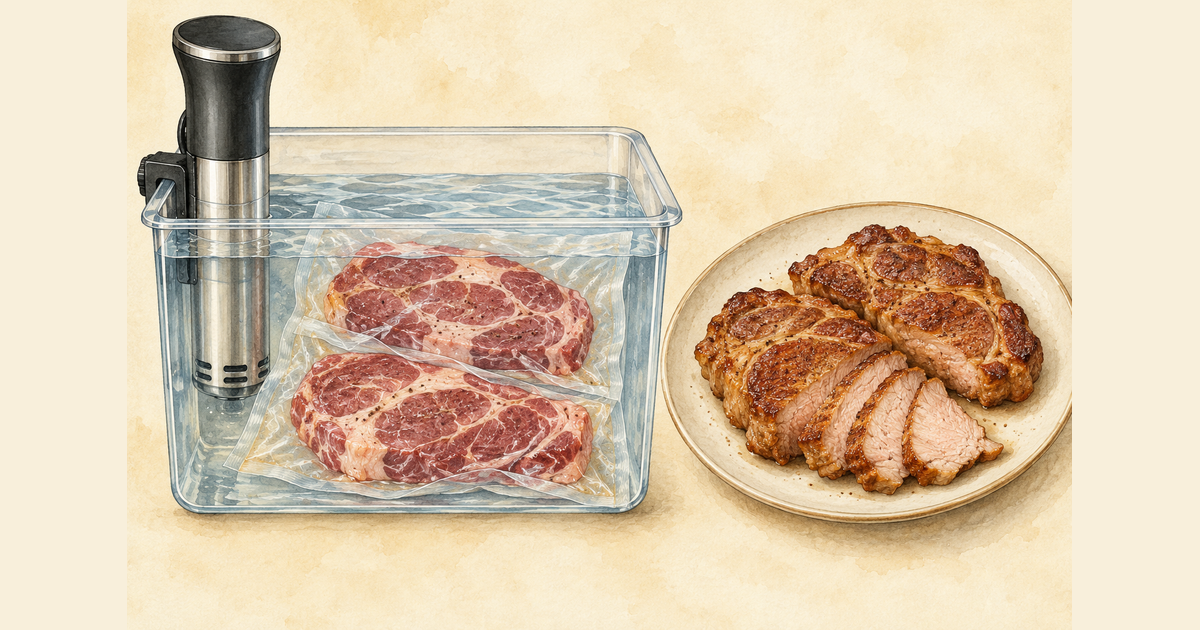
- A firm, sliceable steak with browned edges and visible seams of fat.
Best for
- Plain boneless whole pork shoulder steaks 1 inch thick, each lying flat in its own bag. Thicker steaks, bone-in pieces, whole shoulders, injected meat, and rolled pieces need other instructions.
Get it ready
- Ask for boneless pork shoulder steaks cut 1 inch thick. Choose plain intact meat without injected seasoning or mechanical tenderizing.
- Trim loose silver skin and hard ragged fat. Leave the steak flat instead of gathering its separate muscles into a bundle.
- Season both sides and seal each refrigerator-cold steak in a separate food-safe bag.
- Fully submerge the bags in the heated circulating bath with room for water to flow between them. Start timing when the steaks go in.
Finish and serve
- Use clean utensils to remove the meat from its bag and discard the liquid.
- Measure the center before browning. Insert the thermometer from the side into the thickest meat center of each steak, avoiding fat seams, and check more than one meaty area. Every checked spot must reach 145°F. If a spot is cooler, continue cooking in a skillet or oven and check again.
- Dry the steaks well and brush lightly with oil. Brown both sides in a skillet or on a grill, working in batches so the pieces stay flat.
- Rest at least 3 minutes after the final heat before cutting. Slice across the grain of each section, cutting around any tough seam that remains. Serve immediately with the browned edges facing up.
Useful tips
- Check the label carefully: a pork loin steak and a shoulder steak come from different cuts.
- Look at the grain in each muscle section before slicing; it may not run in one direction across the whole steak.
- Add a sugary glaze near the end of browning so it does not burn before the surface colors.
Common problems
- A seam is still chewy
- The steak contains connective tissue that a short cook has not softened fully. Cut around the tough seam when serving. Do not expect the texture of pulled pork from this schedule.
- The meat is gray instead of browned
- Moisture on the surface or a crowded pan is producing steam. Pat the steaks dry and brown fewer pieces at a time.
Questions
QCan I use a bone-in blade steak?
QCan I use the whole pork shoulder guide?
QDoes a 145°F bath mean the center is ready?
Cook safely
Use fully thawed, refrigerator-cold intact whole-muscle meat. This guide does not cover ground, injected, mechanically tenderized, cured, stuffed, or rolled meat.
Insert the thermometer from the side into the thickest meat center of each steak, avoiding fat seams, and check more than one meaty area. Each measured spot must reach 145°F before the final browning.
If a spot is cooler, continue cooking in a skillet or oven and check again. The bath timer alone cannot make the meat ready to eat. Rest for at least 3 minutes after the last heat before cutting or serving.
Use clean utensils, discard bag liquid, and serve immediately. These instructions do not cover chilling, storage, reheating, or hot holding.