Last updated
Overview
Skirt is a long ribbon of beef with a coarse, visible grain. A tough membrane may remain on the surface; peel it off before seasoning. Butchers sell inside and outside skirt, so ask which you are getting and whether it is already peeled.
This guide gives plain skirt a longer bath before the measured hot cooking step in Cook safely. For carne asada, see the separate guide to that dish. If your package says flank, use the flank steak guide.
Time and temperature
Swipe to see all columns
| Texture | Bath setting | Check before serving | Cook time |
|---|---|---|---|
| Seared Ribbons | 132°F | 145°F | 8–10 hours |
A plain boneless 1 1/2-pound skirt steak, membrane removed and divided into two flat pieces bagged separately. The source does not distinguish inside and outside skirt; neither name makes its timer a guarantee of center temperature. Start timing when the bag enters the fully heated circulating bath. The listed time is the bath stage only; allow additional time for hotter cooking, browning, and the rest. Follow the thermometer check in Cook safely before serving.
Choose your texture
- 132°FSeared Ribbons
- Beefy slices with a coarse grain and some chew.
Best for
- A plain boneless 1 1/2-pound skirt steak, membrane removed and divided into two flat pieces bagged separately. The source does not distinguish inside and outside skirt; neither name makes its timer a guarantee of center temperature.
Get it ready
- Choose plain intact skirt steak and ask whether it is inside or outside skirt and whether the membrane has been removed.
- Peel away tough membrane and trim hard loose fat. Trace the coarse grain before seasoning.
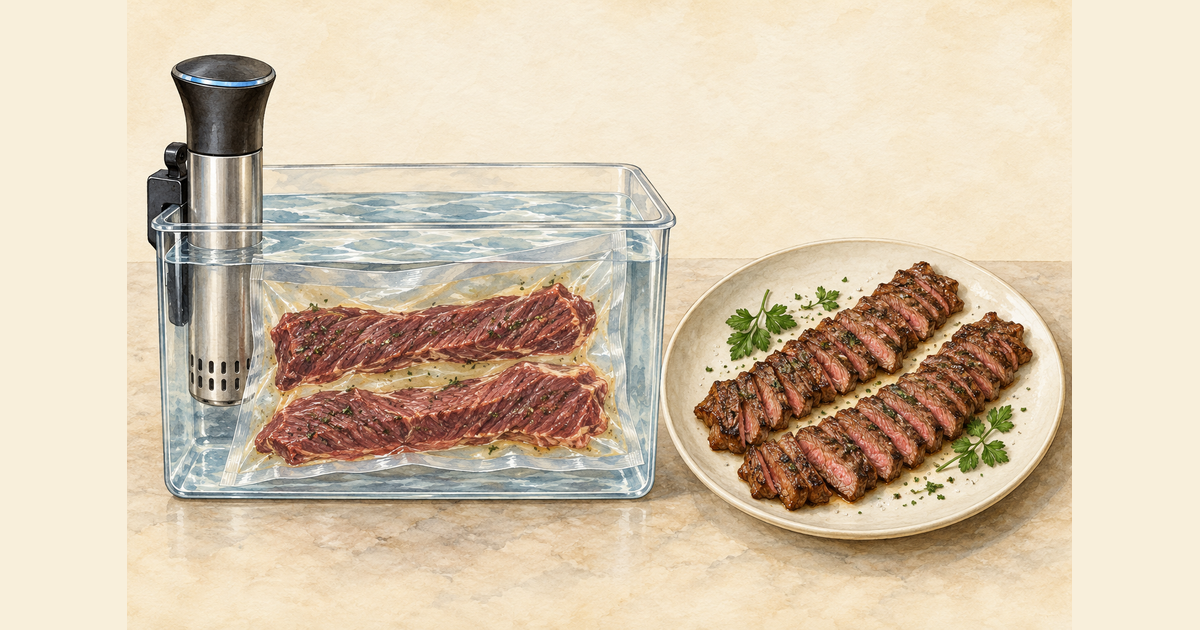
- Divide the 1 1/2-pound steak into two manageable pieces. Season and bag each refrigerator-cold ribbon separately, lying flat without folds.
- Seal, fully submerge in the heated circulating bath, and start timing. Keep the pouches apart so water can circulate throughout the cook.
Finish and serve
- Use clean utensils to remove the meat from its bag and discard the liquid.
- Continue cooking in a skillet or oven until each thick center reaches 145°F. Check the thickest center of each ribbon from its side, keeping the probe tip inside the thin meat, and check any thicker patches separately. Recheck cooler areas before the final browning.
- Pat the ribbons dry, brush lightly with oil, and brown both broad faces. Cook separate batches if the pan cannot hold the pieces flat.
- Rest at least 3 minutes after the final heat before cutting. Cut the long ribbons into manageable sections, then carve thin slices across the grain of each section and serve immediately.
Useful tips
- Ask the butcher to peel the membrane if you cannot lift it cleanly.
- Find the grain on the actual piece; do not assume it follows the longest edge.
- Stay within the bath range rather than extending it overnight without a reviewed plan.
Common problems
- The surface has a tough skin
- A layer of membrane remained on the steak. Remove the membrane before bagging rather than trying to soften it with a longer bath.
- The pan fills with liquid and the steak stays gray
- Wet ribbons or a crowded skillet steam instead of browning. Dry each piece carefully and brown in separate batches with room around the meat.
Questions
QShould I buy inside or outside skirt?
QCan I fold skirt to fit the bag?
QCan I use the flank steak time?
Cook safely
Use fully thawed, refrigerator-cold intact whole-muscle meat. This guide does not cover ground, injected, mechanically tenderized, cured, stuffed, or rolled meat.
Check the thickest center of each ribbon from its side, keeping the probe tip inside the thin meat, and check any thicker patches separately. Each measured spot must reach 145°F before the final browning.
If a spot is cooler, continue cooking in a skillet or oven and check again. This bath is below that temperature and needs a hotter cooking step; its timer alone cannot make the meat ready to eat.
Rest for at least 3 minutes after the last heat before cutting or serving. Use clean utensils, discard bag liquid, and serve immediately. These instructions do not cover chilling, storage, reheating, or hot holding.