Last updated
Overview
Back ribs come from the rib section and have a different shape from thick, meaty short ribs. Much of the meat sits between the curved bones, which makes both bagging and thermometer placement worth a little care.
Choose a rack with meat still attached between the ribs. The long bath needs steady circulation and enough water throughout; the final browning gives the outside its crust.
Time and temperature
Swipe to see all columns
| Texture | Bath setting | Check before serving | Cook time |
|---|---|---|---|
| Tender Rib Rack | 146°F | 145°F | 48 hours |
One plain 4-pound rack of beef back ribs, kept flat in a bag with no folded or stacked sections. This does not cover plate short ribs, flanken-cut ribs, boneless rib meat, or larger racks. Start timing when the bag enters the fully heated circulating bath. The listed time is the bath stage only; allow additional time for the center check, any hotter cooking needed, and browning, followed by the rest. Follow the thermometer check in Cook safely before serving.
Choose your texture
- 146°FTender Rib Rack
- Softened rib meat that can be cut into portions, with a browned outside.
Best for
- One plain 4-pound rack of beef back ribs, kept flat in a bag with no folded or stacked sections. This does not cover plate short ribs, flanken-cut ribs, boneless rib meat, or larger racks.
Get it ready
- Choose one plain 4-pound rack of beef back ribs. Check that it is not a rack of thick plate short ribs.
- Trim loose membrane and sharp exposed bone fragments. Use food-safe bone guards if needed to protect the bag from punctures.
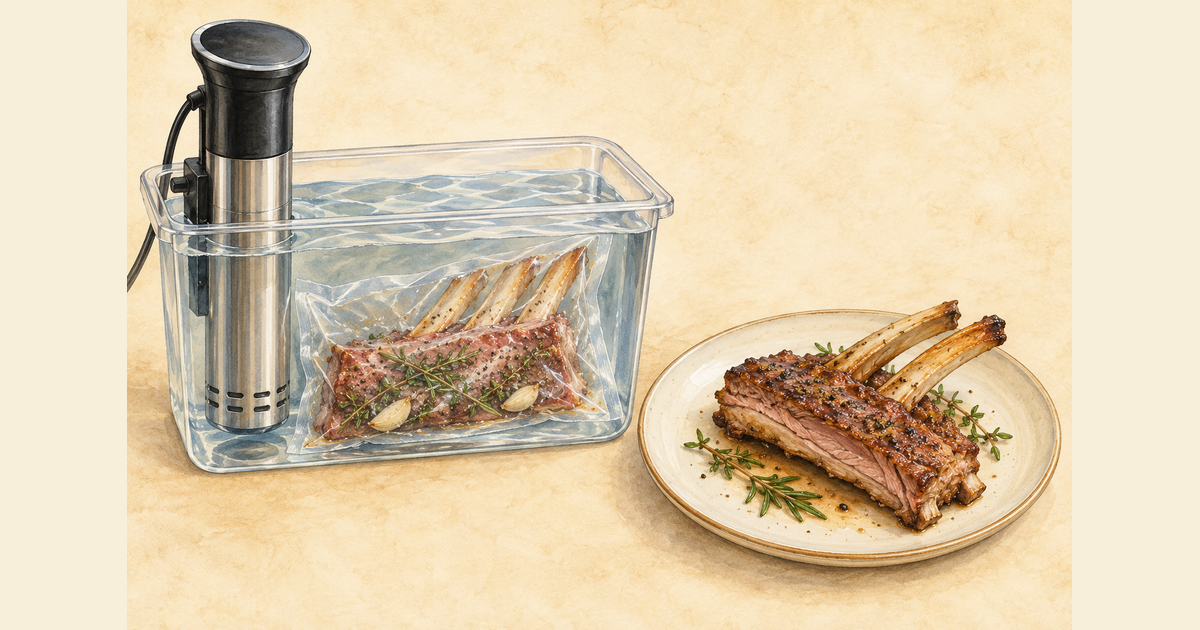
- Season and seal the refrigerator-cold rack flat in a suitably sized food-safe bag. Do not fold it over or stack sections.
- Fully submerge in the heated circulating bath and start timing. Cover the vessel as its manufacturer permits and check water levels during the 48-hour cook. Keep the rack submerged and the circulator within its water limits.
Finish and serve
- Use clean utensils to remove the meat from its bag and discard the liquid.
- Measure the center before browning. Check the thickest meat between the bones in several places on each rack, keeping the thermometer tip inside meat and away from bone. Every checked spot must reach 145°F. If a spot is cooler, continue cooking in a skillet or oven and check again.
- Dry the rack carefully, apply a light coating of oil or dry seasoning, and brown it in a hot oven or over controlled grill heat. Watch thin edges and sweet rubs for scorching.
- Rest at least 3 minutes after the final heat before cutting. Set the rack on a clean board, cut between the bones, and serve immediately. Use a separately prepared sauce if you want a sauced finish.
Useful tips
- Look for meat between the bones when buying; long bare bones do not add much to the plate.
- Leave space for water to move around the whole rack.
- Handle the cooked rack gently with a wide utensil so the softened meat stays attached while you brown it.
Common problems
- The bag leaks around a bone
- An exposed sharp edge has punctured the plastic. Prevent this by trimming sharp fragments and using food-safe bone guards before cooking. If a leak interrupts the cook, do not assume the original timer still establishes readiness.
- The rub blackens before the rack browns
- Sugar or fine spices are scorching under direct heat. Use a lighter coating and move the rack away from the strongest heat.
Questions
QAre back ribs and short ribs interchangeable?
QCan I fold the rack to fit the bag?
QCan I leave the bath unattended for two days?
Cook safely
Use fully thawed, refrigerator-cold intact whole-muscle meat. This guide does not cover ground, injected, mechanically tenderized, cured, stuffed, or rolled meat.
Check the thickest meat between the bones in several places on each rack, keeping the thermometer tip inside meat and away from bone. Each measured spot must reach 145°F before the final browning.
If a spot is cooler, continue cooking in a skillet or oven and check again. The bath timer alone cannot make the meat ready to eat. Rest for at least 3 minutes after the last heat before cutting or serving.
Use clean utensils, discard bag liquid, and serve immediately. These instructions do not cover chilling, storage, reheating, or hot holding.