Last updated
Overview
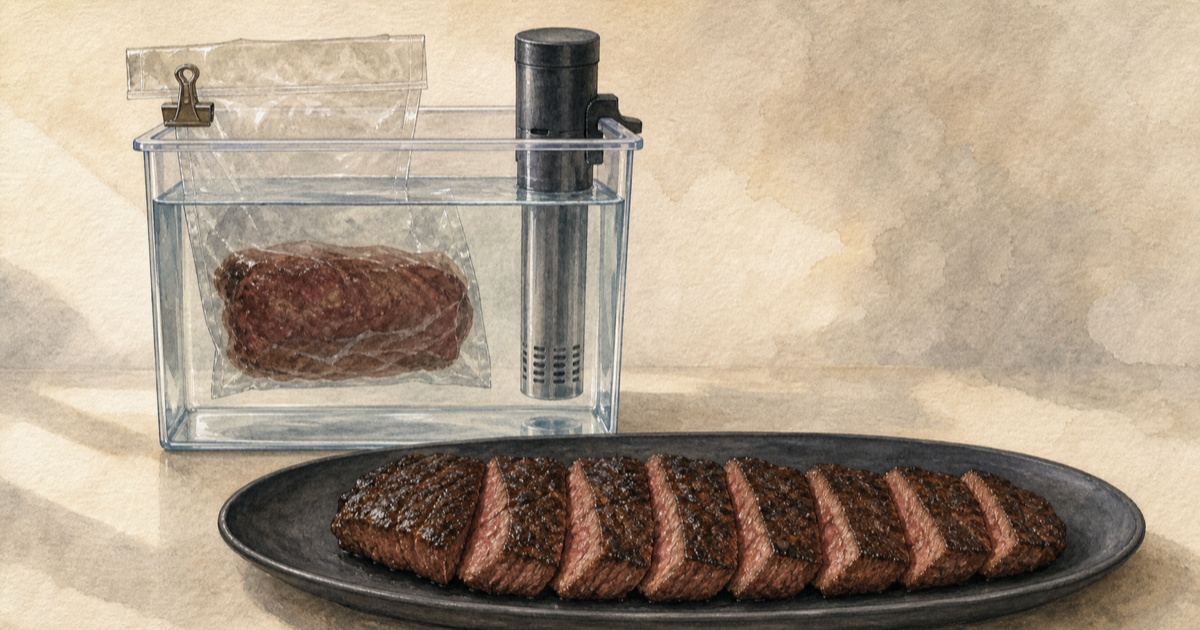
Lime, garlic, cilantro, and spices season the steak before it goes into the bag. Give it a fast finish over high heat for charred edges, then rest and slice across the grain.
Time and temperature
Swipe to see all columns
| Texture | Bath setting | Check before serving | Cook time | Longest time |
|---|---|---|---|---|
| Medium-Rare | 130°–135°F | 145°F | 2–3 hours | 6 hours |
| Medium | 135°–140°F | 145°F | 2–3 hours | 6 hours |
Choose the time that matches the texture you want. Start timing when the bag goes into the fully heated water bath, and read the Cook safely section before serving.
Choose your texture
- 130°–135°FMedium-Rare
- A juicy pink center with charred edges from the final sear.
Best for
- Tacos
- Burritos
- Plated with sides
Notes
- Use skirt steak, flank steak, or sirloin flap meat for authentic texture
- Slice against the grain for a very tender texture
Tips
- Marinate for at least 2 hours, up to overnight for deeper flavor
- Pat meat dry before searing to get the best char
- Let rest 5 minutes after searing before slicing
- 135°–140°FMedium
- A warm, lightly pink center with a firmer bite.
Best for
- Fajitas
- Rice bowls
- Quesadillas
Notes
- At this temp, meat will be slightly firmer but still tender when sliced thin
- Good option for those who don't enjoy medium-rare beef
Tips
- Even at medium, slicing against the grain is important
- This temperature holds longer without getting mushy
Get it ready
- Mix lime juice, garlic, cilantro, and spices for the marinade; add orange juice if you like a sweeter note.
- Marinate the steak in the refrigerator for 2–8 hours, saving a clean spoonful of marinade for serving.
- Seal the steak with 2–3 tablespoons of marinade in a food-safe bag.
- Keep the bag fully submerged while the steak cooks.
Finish and serve
- Take the steak out of the bag and pat it very dry.
- Sear it quickly in a very hot skillet or on the grill until the edges char.
- Rest for at least 3 minutes, then slice across the grain and serve.
Useful tips
- Skirt steak is the right cut, not flank. Skirt has more fat, more flavor, and a looser grain that makes it easier to slice thin without going chewy. Flank works, but it'll always taste a little leaner. If your butcher offers outside skirt, grab it.
- Marinate in citrus and chiles for at least 2 hours, but no more than 8. The acid will start to denature the proteins and turn them mushy after that. A classic carne asada marinade is lime, orange, garlic, cumin, oregano, and chipotle.
- Sous vide at 130°–135°F for 2–3 hours, no more. Skirt is thin and cooks fast — leaving it longer won't add tenderness, just degrade the texture. The whole point is to keep the medium-rare doneness while letting the flavors penetrate.
- Sear over the highest heat you can generate. A rip-screaming carbon steel pan or a grill grate held directly over coals. You want char in 30 seconds, not slow caramelization. Carne asada should taste of fire, not stovetop.
- Anti-tip: don't slice with the grain. Skirt steak's grain runs across the strip, and slicing parallel to it gives you long, chewy ribbons. Cut against the grain at a slight angle for short, tender bites. This single trick separates good carne asada from bad.
Questions
QMedium-Rare: What cut of beef is best for carne asada?
QMedium-Rare: How do I get the charred flavor without a grill?
QMedium-Rare: Can I marinate the meat while it cooks sous vide?
QMedium: Will medium doneness be tough?
QMedium: Is this temperature better for kids?
QMedium: Can I mix different doneness levels?
Cook safely
Use the chart for timing, then check the thickest part of the steak with a food thermometer. It should reach 145°F. Rest it for at least 3 minutes before slicing, and keep the cooked food away from raw juices. If the meat is ground, injected, mechanically tenderized, rolled, or stuffed, follow the package directions or a guide written for that form.