Last updated
Overview
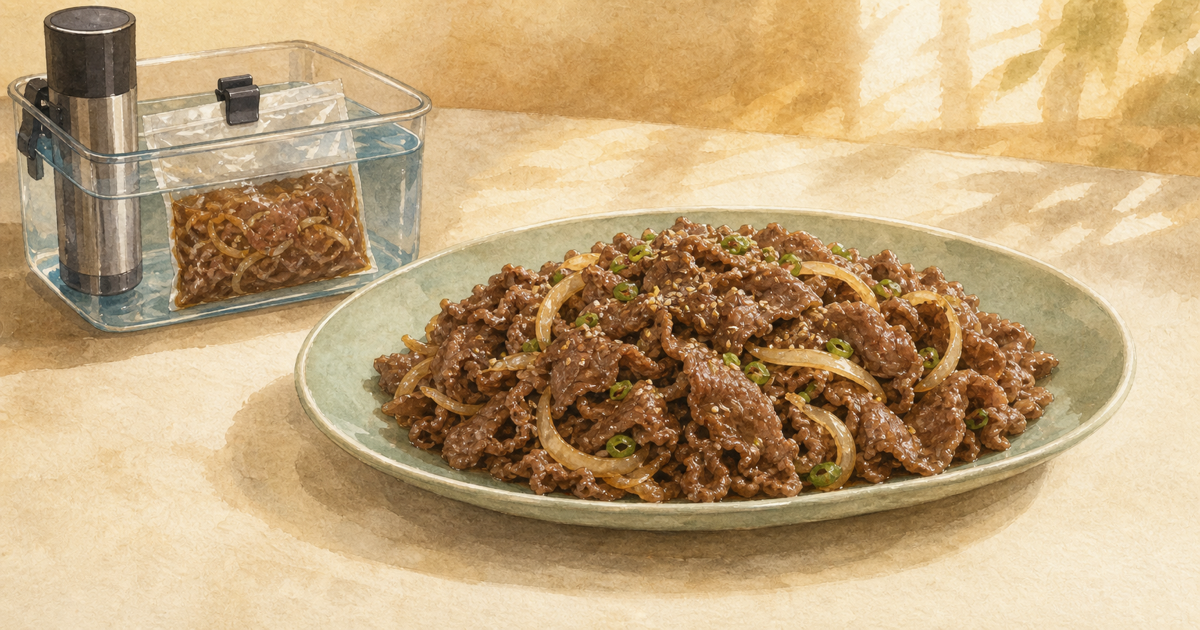
Thin slices of beef soak up soy sauce, sesame oil, garlic, and Asian pear before cooking. A fast final sear caramelizes the edges and brings the sweet-savory marinade to life.
Time and temperature
Swipe to see all columns
| Texture | Bath setting | Check before serving | Cook time | Longest time |
|---|---|---|---|---|
| Tender | 130°–135°F | 145°F | 2–4 hours | 6 hours |
| Well-Done | 140°–145°F | 145°F | 2–4 hours | 6 hours |
Choose the time that matches the texture you want. Start timing when the bag goes into the fully heated water bath, and read the Cook safely section before serving.
Choose your texture
- 130°–135°FTender
- Juicy beef with a tender bite and caramelized edges after searing.
Best for
- Lettuce wraps (ssam)
- Rice bowls (bibimbap)
- Korean BBQ spreads
Notes
- Use ribeye or sirloin for best marbling
Tips
- Asian pear tenderizes meat naturally — don't skip it!
- Slice meat against the grain for a very tender texture
- Reserve a clean portion of marinade before bagging if you want sauce for drizzling
- 140°–145°FWell-Done
- Firmer, fully cooked beef that stays tender in the pear and soy marinade.
Best for
- Traditional Korean BBQ
- Those who prefer no pink meat
- Family-style meals
Notes
- Even at this temperature, sous vide keeps meat tender
- The marinade prevents dryness
Tips
- Chop fine for kimbap (Korean sushi rolls)
- Add to fried rice for quick weeknight dinner
Get it ready
- Slice the beef about 1/8 inch thick, cutting across the grain.
- Mix grated Asian pear, soy sauce, sesame oil, garlic, and ginger for the marinade.
- Coat the beef with the marinade and refrigerate for 4–24 hours.
- Arrange the beef in a flat layer in one or more food-safe bags, then seal.
- Keep every bag fully submerged while the beef cooks.
Finish and serve
- Drain the beef and shake off the extra marinade.
- Sear in batches in a very hot skillet or on the grill until the edges caramelize.
- Rest for at least 3 minutes, then add scallions and sesame seeds and serve.
Useful tips
- Pear is the key. Korean bulgogi marinades use grated Asian pear (or kiwi in a pinch) for the enzymes that tenderize the beef from the inside. Skip it and you've got teriyaki. Use it and the meat nearly melts. Marinate at least 4 hours, if you like overnight.
- Use ribeye, not sirloin. The marbling renders during the bath and the bulgogi marinade carries that fat back into the meat. Sirloin gets lean and tight at 130°–135°F. Slice the ribeye paper-thin against the grain after the bath, never before.
- Cook at 130°–135°F for 2–4 hours for the steak-like texture, or push to 140°–145°F for a more traditional well-done bulgogi. The lower temperature keeps the marinade from cooking out, so you taste the soy and sesame more clearly.
- Sear in very hot oil with sesame seeds added at the end. The whole point of bulgogi is the contrast between the silky interior and a deeply caramelized crust. A wok over the highest heat your stove can muster is the right tool.
Questions
QTender: Can I use a different cut of beef?
QTender: Why Asian pear in the marinade?
QWell-Done: Will this be tough at 145°F?
QWell-Done: Is this more authentic?
Cook safely
Use the chart for timing, then check the thickest part of the beef with a food thermometer. It should reach 145°F. Rest it for at least 3 minutes before slicing, and keep the cooked food away from raw juices. If the meat is ground, injected, mechanically tenderized, rolled, or stuffed, follow the package directions or a guide written for that form.