Last updated
Overview
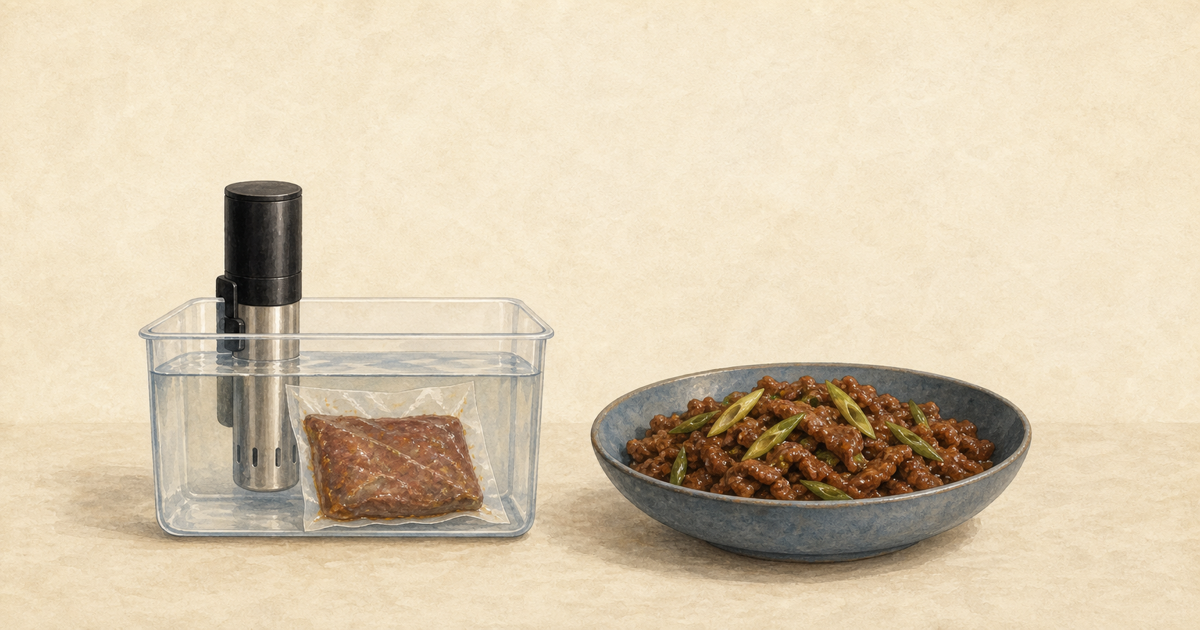
Thin, tender beef meets a glossy soy-ginger sauce and plenty of green onions. Finish it quickly in a hot skillet so the sauce clings without making the beef tough.
Time and temperature
Swipe to see all columns
| Texture | Bath setting | Check before serving | Cook time | Longest time |
|---|---|---|---|---|
| Tender | 130°–135°F | 145°F | 2–3 hours | 6 hours |
| Firmer | 140°–145°F | 145°F | 2–3 hours | 6 hours |
Choose the time that matches the texture you want. Start timing when the bag goes into the fully heated water bath, and read the Cook safely section before serving.
Choose your texture
- 130°–135°FTender
- Tender beef coated in a glossy sweet-savory sauce.
Best for
- Takeout-style dinners
- Rice bowls
- Stir-fry presentations
Notes
- Use flank steak or sirloin for best results
- Slice against the grain for a very tender texture
Tips
- Cornstarch coating creates velvety texture
- Use dark soy sauce for richer color and flavor
- High heat wok creates best sauce coating
- 140°–145°FFirmer
- A firmer bite that still stays juicy under the sauce.
Best for
- Traditional Chinese-American style
- Those who prefer no pink meat
Notes
- Still tender after the gentle cook
Tips
- Double the sauce recipe for extra saucy version
Get it ready
- Slice the flank steak into 1/4-inch strips, cutting across the grain.
- Toss the beef with cornstarch until every strip has a light coating.
- Arrange the strips in one flat layer in a food-safe bag, then seal.
- Keep the bag fully submerged while the beef cooks.
Finish and serve
- Take the beef out of the bag and pat it dry.
- Sear the strips in batches in a very hot skillet.
- Simmer the soy-ginger sauce until glossy, then toss it with the beef.
- Rest for at least 3 minutes, add the green onions, and serve.
Useful tips
- Slice flank against the grain after the bath, not before. Flank's fibers are coarse and run lengthwise, so cutting across them turns chewy into tender. A 30-degree angle makes the slices wider and thinner, good for catching the sticky sauce.
- Cornstarch is non-negotiable. Toss the cooked beef in cornstarch right before searing — it creates the slightly crispy edge that distinguishes Mongolian beef from a stir-fry. Don't bread it; just a light dusting that turns translucent in the oil.
- Sous vide at 130°–135°F for 2–3 hours. Mongolian beef wants medium-rare interior with hot caramelized exterior — the contrast is the whole point. Anything over 140°F and you've lost the textural play.
- Sauce should be cooked separately, not in the bag. Reduce soy, brown sugar, garlic, and ginger in a hot wok until it's sticky and lacquered, then toss the seared beef in for 30 seconds. Sauce in the bag steams the meat instead of glazing it.
- Anti-tip: don't skip the green onions. The white parts go into the sauce, the green tops get tossed in at the very end for crunch and color. They're not garnish — they're a structural ingredient. Real Mongolian beef is half scallion by volume.
Questions
QTender: What cut of beef works best?
QTender: Can I make this gluten-free?
QTender: How do I get the sauce to stick?
QFirmer: Will this be dry at 145°F?
Cook safely
Use the chart for timing, then check the thickest part of the mongolian beef with a food thermometer. It should reach 145°F. Rest it for at least 3 minutes before slicing, and keep the cooked food away from raw juices.
If the meat is ground, injected, mechanically tenderized, rolled, or stuffed, follow the package directions or a guide written for that form.