Last updated
Overview
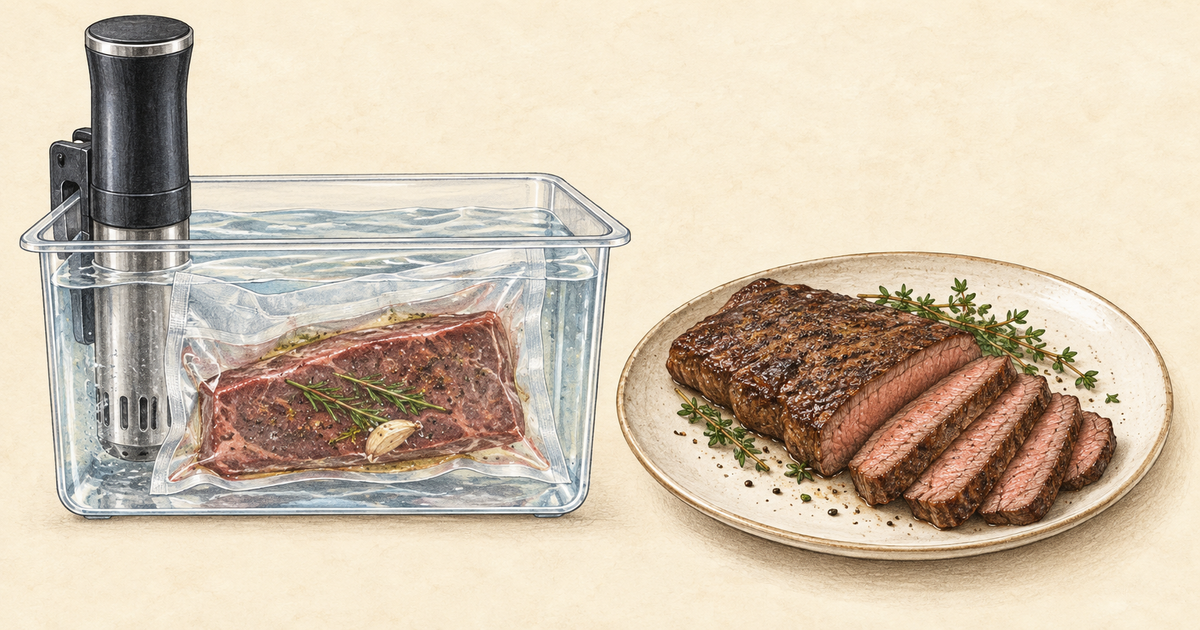
Flat iron comes from the shoulder but cooks into neat, tender slices when its central seam has been removed. This guide uses the long bath from Cuisine Solutions, followed by additional heat and a thermometer check before the final browning.
The finished steak will be more cooked than the rosy result shown in many low-temperature recipes. Keep the meat flat rather than folding or rolling it.
Time and temperature
Swipe to see all columns
| Texture | Bath setting | Check before serving | Cook time |
|---|---|---|---|
| Tender Slices | 131°F | 145°F | 24 hours |
One trimmed 1 1/2-pound flat iron steak, kept flat rather than folded or rolled. Start timing when the bag enters the fully heated circulating bath. The bath begins the cook. Follow the thermometer check in Cook safely, using additional heat when needed before the final finish.
Choose your texture
- 131°FTender Slices
- A long bath softens the shoulder muscle, then the skillet adds a dark crust.
Best for
- One trimmed 1 1/2-pound flat iron steak, kept flat rather than folded or rolled.
Get it ready
- Ask for a seam-trimmed flat iron steak; remove any remaining tough membrane without cutting the meat into small pieces.
- Keep the steak refrigerated until the bath is ready. Season it on both sides and lay it flat in a heat-rated food bag with a little neutral oil.
- Seal without folding the steak. Fully preheat the circulating bath, submerge the bag, and start the listed time.
- Cover the bath to reduce evaporation and keep its water level above the food throughout the long cook.
Finish and serve
- Open the bag with clean tools, transfer the steak to a clean tray, and discard the bag liquid.
- Because this bath is cooler than the serving temperature below, continue cooking the steak in a skillet or oven. Check its thickest center in several places until each reads 145°F.
- Pat the steak dry and sear both broad faces in a hot skillet until browned.
- Rest for at least 3 minutes after the final heat, then slice across the grain and serve immediately.
Useful tips
- Keep a light hand with sweet rubs; sugar can burn before the surface browns.
- Cut across the visible grain so each slice has short fibers.
- Finish the plate with a tart sauce or lemon-dressed greens to balance the rich crust.
Common problems
- A firm strip runs through the steak
- The shoulder seam was left in place. Ask the butcher to remove the seam when buying flat iron; a long cook does not make a thick strip of sinew pleasant to eat.
- The outside burns before it browns evenly
- The meat is wet or a sugary coating is scorching. Pat the surface dry and use a thin coating of oil. Add sweet glazes after browning.
Questions
QIs flat iron the same as flank steak?
QWill the steak remain medium-rare?
QCan I fold a large steak into a smaller bag?
Cook safely
Use fully thawed, refrigerator-cold whole pieces of meat; this guide does not cover ground, injected, mechanically tenderized, stuffed, or rolled meat.
Insert the thermometer from the side into the center of the thickest part of every steak, avoiding seams of fat and checking several places along uneven pieces. Each measured spot must reach 145°F before the final browning or sauce.
If a spot is cooler, continue cooking in a skillet or oven and check again. A bath below that temperature needs a hotter cooking step; the timer alone cannot make it ready to eat.
Rest for at least 3 minutes after the last heat before slicing, pulling, or serving. Use clean utensils, discard bag liquid, and serve immediately. These instructions do not cover chilling, storage, reheating, or hot holding.