Last updated
Overview
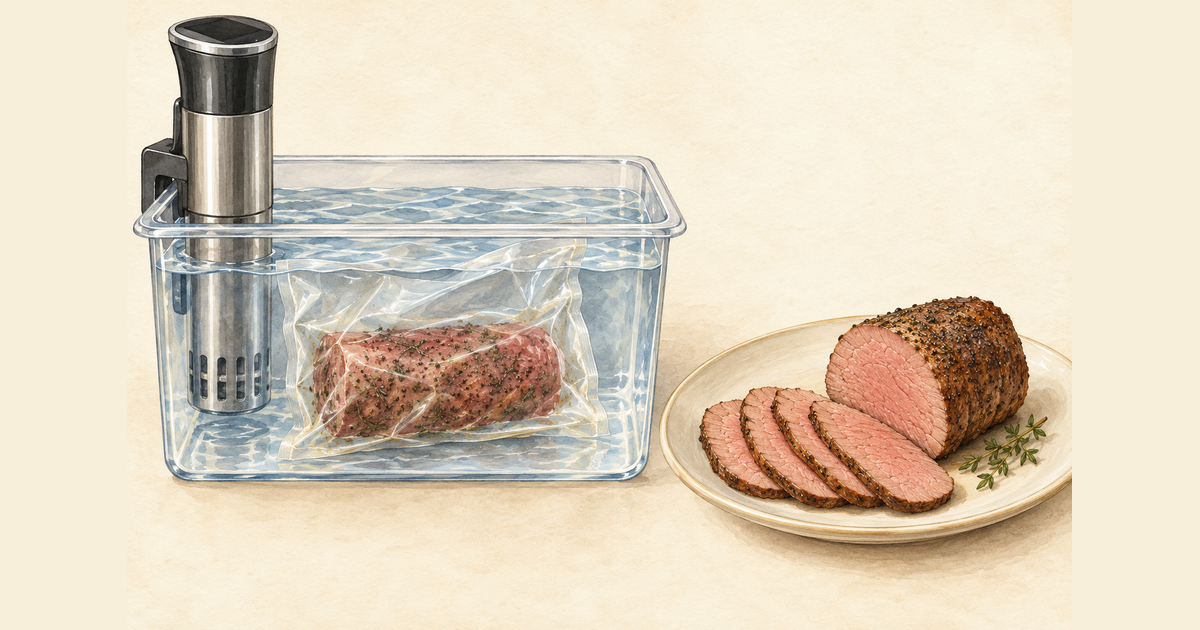
Eye of round is the long, rounded muscle from the rear leg of the animal. It has far less fat than ribeye and stays firmer than a chuck roast cooked for pulling. Choose it when you want neat, thin slices.
Allow time for a long bath and the hotter cooking needed to bring the center to the temperature in Cook safely. Even a well-browned roast needs that thermometer check before carving.
Time and temperature
Swipe to see all columns
| Texture | Bath setting | Check before serving | Cook time |
|---|---|---|---|
| Thin Sliced Roast | 131°F | 145°F | 30 hours |
One plain boneless eye of round roast weighing 3–4 pounds, left in its natural shape. This time does not cover other round cuts, steaks, rolled meat, or larger roasts. Weight alone does not show whether the center is cooked. Start timing when the bag enters the fully heated circulating bath. The listed time is the bath stage only; allow additional time for the center check, any hotter cooking needed, and browning, followed by the rest. Follow the thermometer check in Cook safely before serving.
Choose your texture
- 131°FThin Sliced Roast
- Lean roast beef with a firm bite and a browned edge.
Best for
- One plain boneless eye of round roast weighing 3–4 pounds, left in its natural shape. This time does not cover other round cuts, steaks, rolled meat, or larger roasts. Weight alone does not show whether the center is cooked.
Get it ready
- Choose a plain 3–4 pound eye of round, with no injected solution or mechanical tenderizing. Check the cut name; top round and bottom round are different cuts.
- Trim loose silver skin and ragged fat. Keep the roast refrigerator-cold and leave it in its natural shape.
- Season the outside and seal the roast in a food-safe bag without folding or rolling it.
- Fully submerge the bag in the heated circulating bath and start timing. Use a suitable cover and check the water level throughout the long cook, keeping it within the circulator limits.
Finish and serve
- Use clean utensils to remove the meat from its bag and discard the liquid.
- Measure the center before browning. Check the thickest center of each roast from more than one direction, avoiding outside fat and checking several places along its length. Every checked spot must reach 145°F. If a spot is cooler, continue cooking in a skillet or oven and check again.
- Pat the roast dry, brush lightly with oil, and turn it in a wide skillet to brown the outside. Keep the crust from burning while you work around the curved sides.
- Rest at least 3 minutes after the final heat before cutting. Cut thin slices across the grain with a sharp carving knife and serve immediately. Offer a separately prepared sauce alongside the lean meat.
Useful tips
- Find the grain before seasoning so you know which way to carve.
- Choose a pan that lets you turn the roast without pressing it against the sides.
- Keep an eye on the bath water level; a long cook needs more attention to evaporation than a short steak cook.
Common problems
- The slices are hard to chew
- Thick slices leave more long muscle fibers in each bite. Cut thinner slices across the grain after the required rest.
- The crust scorches in patches
- The curved roast has stayed on one spot in the skillet too long. Turn the roast to expose a fresh surface and lower the pan heat if the seasoning begins to burn.
Questions
QCan I use top round instead?
QWill it become like pulled beef?
QCan I chill it for deli slices?
Cook safely
Use fully thawed, refrigerator-cold intact whole-muscle meat. This guide does not cover ground, injected, mechanically tenderized, cured, stuffed, or rolled meat.
Check the thickest center of each roast from more than one direction, avoiding outside fat and checking several places along its length. Each measured spot must reach 145°F before the final browning.
If a spot is cooler, continue cooking in a skillet or oven and check again. The bath timer alone cannot make the meat ready to eat. Rest for at least 3 minutes after the last heat before cutting or serving.
Use clean utensils, discard bag liquid, and serve immediately. These instructions do not cover chilling, storage, reheating, or hot holding.