Back to Fish
Last updated
Overview
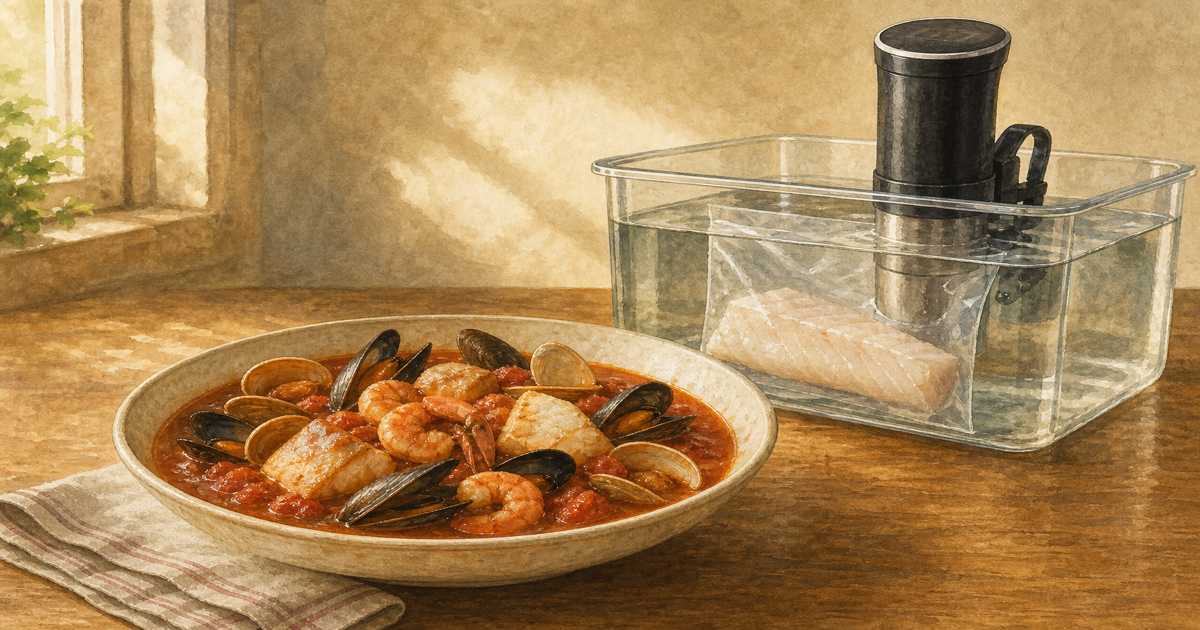
Cioppino brings fish, shrimp, mussels, and clams together in a rich tomato broth. Cook the seafood gently, then combine everything just before serving so each piece stays tender.
Time and temperature
Swipe to see all columns
| Texture | Bath setting | Cook time | Longest time |
|---|---|---|---|
| Tender Seafood | 125°–130°F | 30–45 minutes | 60 minutes |
Choose the time that matches the texture you want. Start timing when the bag goes into the fully heated water bath, and read the Cook safely section before serving.
Choose your texture
- 125°–130°FTender Seafood
- Juicy fish and shrimp that stay tender in the hot tomato broth.
Best for
- Special occasion dinners
- Italian feast
- Seafood lovers
Tips
- Use freshest seafood available
- Cook different seafood separately for the right doneness
- Crusty bread is essential for soaking up broth
Get it ready
- Cut the fish into even chunks and season the fish and shrimp.
- Seal the fish and shrimp in flat food-safe bags and keep them fully submerged.
- Make the tomato broth while the seafood cooks.
- Cook the mussels and clams separately until they open.
Finish and serve
- Bring the tomato broth to a lively simmer.
- Add the cooked fish and shrimp, then fold in the mussels and clams that opened.
- Discard any mussels or clams that stayed closed.
- Finish with herbs and olive oil, then serve right away.
Useful tips
- Bag each seafood separately. Clams need 130°F to open, shrimp wants 125°F to stay snappy, and white fish flakes apart at 130°F+. Mixed in one bag, they all cook badly. Use four bags, four temperatures, then combine in the broth at the end.
- Build the tomato broth before any seafood goes in the bath. Sauté fennel, garlic, and onions, deglaze with white wine, add crushed tomatoes and clam juice, simmer 30 minutes. The broth is the heart of cioppino and it can't come together in a bag.
- Cook the seafood while the broth simmers. Sous vide the clams first (they take the longest), then the mussels, then the shrimp, then the firm white fish. Each comes out evenly cooked and you combine them in the warm broth for serving.
- Don't boil the broth once seafood is added. Cioppino is a stew, not a boil. Keep the broth at a bare simmer when you add the cooked seafood — just hot enough to warm everything through without overcooking the proteins you carefully sous vide.
- Anti-tip: don't skip the sourdough. Cioppino is a San Francisco dish, and sourdough is half the experience. A thick slice toasted and rubbed with garlic, sitting at the bottom of the bowl soaking up broth, is mandatory. No bread, no cioppino.
- A hot broth or opened shell never proves another component; check each component independently and serve right away.
Questions
QTender Seafood: What seafood goes in cioppino?
Traditionally white fish (halibut, cod), shrimp, mussels, clams, and sometimes crab or scallops. Use what's freshest.
QTender Seafood: What's the difference between cioppino and bouillabaisse?
Cioppino is Italian-American from San Francisco with tomato base. Bouillabaisse is French from Marseille with saffron. Similar concept, different flavors.
QTender Seafood: Can I make cioppino ahead?
Make the tomato broth ahead. Cook seafood just before serving for best texture.
Cook safely
Check the thickest part of every piece of fish and shrimp with a food thermometer. Each piece should hold at 145°F for at least 15 seconds. Mussels and clams must open; discard any that stay closed. Serve the stew right away.