Last updated
Overview
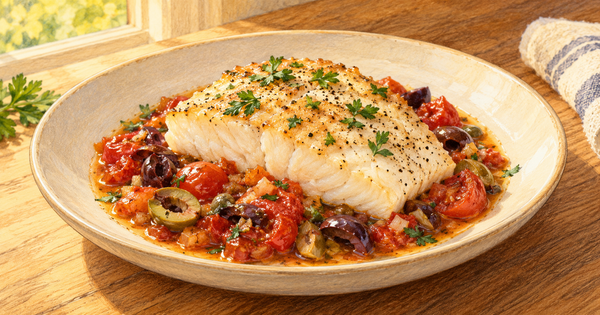
Halibut has firm, pearly flakes and a mild flavor that welcomes lemon, butter, herbs, or a Mediterranean pan sauce. Handle it gently and keep the final sear brief.
Time and temperature
Swipe to see all columns
| Texture | Bath setting | Check before serving | Cook time | Longest time |
|---|---|---|---|---|
| Tender & Flaky | 120°–125°F | 145°F | 30–45 minutes | 60 minutes |
| Firm & Moist | 125°–130°F | 145°F | 40–50 minutes | 60 minutes |
| Traditional | 130°–135°F | 145°F | 30–45 minutes | 60 minutes |
Choose the time that matches the texture you want. Start timing when the bag goes into the fully heated water bath, and read the Cook safely section before serving.
Choose your texture
- 120°–125°FTender & Flaky
- Tender, moist flakes that pair beautifully with lemon butter or herbs.
Best for
- Premium halibut steaks
- Special occasions
Notes
- This is the most luxurious preparation for halibut
- Texture is almost buttery and turns spoon-tender
Tips
- Use the freshest halibut available at this temperature
- Handle very gently — texture is extremely delicate
- A quick sear adds flavor without overcooking
- 125°–130°FFirm & Moist
- Firm, juicy flakes that hold together for a quick sear or pan sauce.
Best for
- All halibut preparations
- Weeknight dinners
Notes
- This is the preferred temperature for halibut
- Balances firmness with moisture evenly
Tips
- This temperature delivers the best balance of texture and moisture
- Handle halibut gently — it's delicate even after cooking
- Pat dry thoroughly before searing to prevent sticking
- Don't over-sear — just add light color
- 130°–135°FTraditional
- A familiar, fully set texture with clean flakes and a moist center.
Best for
- Those who prefer firmer fish
- Salads and bowls
Notes
- This creates a more traditional fish texture
- Still much moister than conventionally cooked halibut
Tips
- This temperature satisfies those who prefer firmer fish
- Great for dishes where fish will be flaked or broken up
- Still benefits from gentle handling
Get it ready
- Pat the halibut dry and season it with salt and pepper.
- Place each fillet in its own bag with a little olive oil or butter.
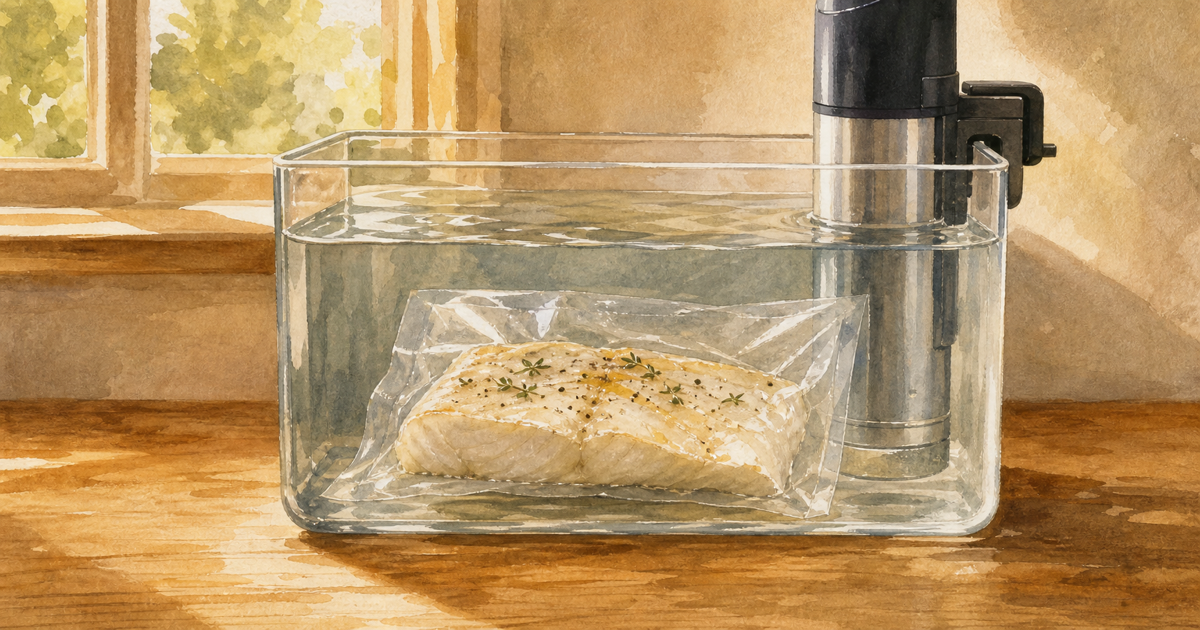
- Add lemon, herbs, or garlic beside the fish, then seal gently.
- Keep the bags flat and fully submerged while the halibut cooks.
Finish and serve
- Lift the halibut carefully from the bag and pat the surface dry.
- Sear it briefly, or spoon over lemon butter or a warm pan sauce.
- Serve right away.
Useful tips
- Salt and butter in the bag are mandatory. Halibut has so little fat of its own that it needs help. Two pats of butter on top of each fillet, plus a generous pinch of salt and a few cracks of pepper, is the minimum for a flavorful result.
- Brown butter is the natural pairing. After every piece passes its thermometer reading, drain the bag liquid into a small saucepan and bring it to a full rolling boil before adding a few tablespoons of butter. Cook until the milk solids brown and smell like hazelnuts, then spoon over the halibut and finish with capers and parsley.
- Sear briefly only if you want a Maillard exterior. Some prefer their halibut pure and simple from the bath. If you want a sear, pat the fillet bone-dry, hot pan, 30 seconds per side, no more. Going longer cooks the interior past the texture you carefully created.
- Anti-tip: don't pair halibut with bold, smoky flavors. Its delicate sweetness gets steamrolled by anything stronger than brown butter or olive oil. Save the BBQ rubs and chili glazes for tuna or salmon. Halibut wants quiet, elegant treatments only.
Questions
QTender & Flaky: What's the texture like at 120°F?
QFirm & Moist: What's the best temperature for halibut?
QFirm & Moist: How do I prevent halibut from sticking to the pan?
QFirm & Moist: Can I cook halibut from frozen?
QTraditional: Will 135°F halibut be dry?
Cook safely
Before serving, check the thickest part of every piece of halibut with a food thermometer. It should hold at 145°F for at least 15 seconds. For a thin piece, slide the thermometer in from the side so the sensing part reaches the center.
If the food is too small to check, cook it until opaque and easy to separate with a fork. If you plan to serve it undercooked, or cool and reheat it later, use a method written for that purpose. Otherwise, serve it right away.
Cook with this guide
Recipes using this guide
Each recipe inherits a reviewed bath setting and cook time from the Halibut guide.