Last updated
Overview
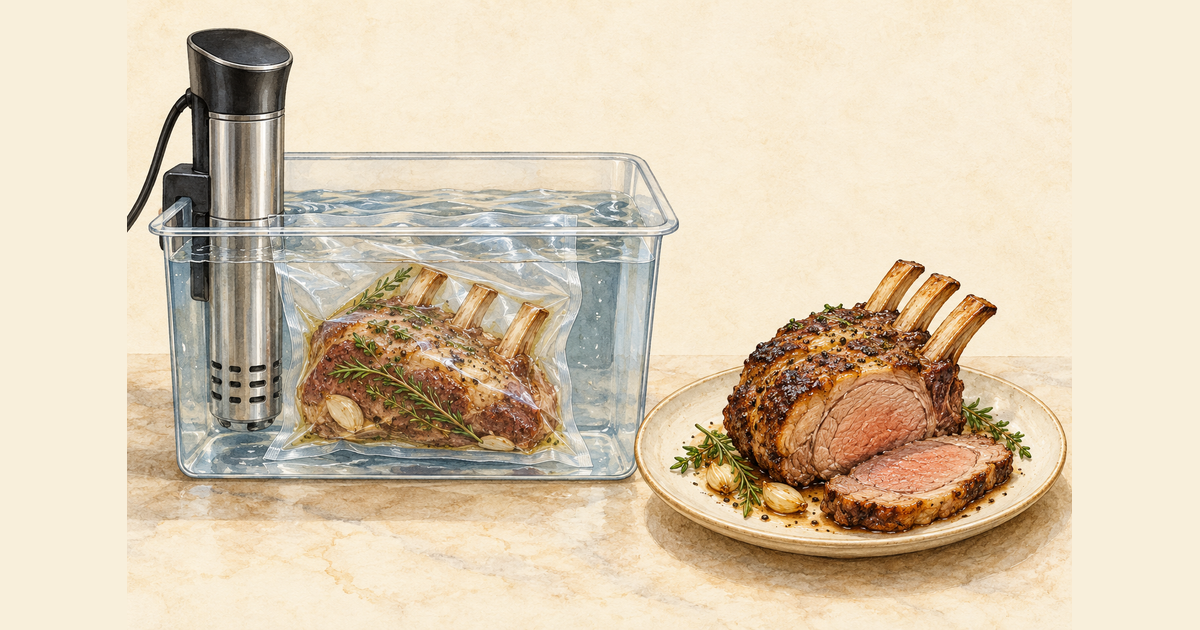
Prime rib is a rib roast, with a central eye of beef, seams of fat, and ribs along one side. This guide focuses on a small bone-in roast rather than a full standing rib roast. Check that it will fit in the bag and bath before you begin.
The bones need room, the thick meat needs a careful temperature check, and the outside needs dry heat to brown. The general roast guide compares other cuts.
Time and temperature
Swipe to see all columns
| Texture | Bath setting | Check before serving | Cook time |
|---|---|---|---|
| Carved Rib Roast | 132°F | 145°F | 6 hours |
One plain 3-pound bone-in beef ribeye roast in its natural shape, with the bones attached. This does not cover a larger standing rib roast, boneless rolled roast, individual ribeye steaks, or injected meat. Start timing when the bag enters the fully heated circulating bath. The listed time is the bath stage only; allow additional time for the center check, any hotter cooking needed, and browning, followed by the rest. Follow the thermometer check in Cook safely before serving.
Choose your texture
- 132°FCarved Rib Roast
- Carved beef with a rich fat seam and a browned crust.
Best for
- One plain 3-pound bone-in beef ribeye roast in its natural shape, with the bones attached. This does not cover a larger standing rib roast, boneless rolled roast, individual ribeye steaks, or injected meat.
Get it ready
- Choose a plain 3-pound bone-in ribeye roast with no injected solution or mechanical tenderizing. Keep the bones attached for this cook.
- Trim loose fat and sharp bone fragments. Protect exposed bone tips with food-safe bone guards if they could puncture the bag.
- Season the refrigerator-cold roast and seal it in a suitably sized food-safe bag without rolling or compressing it.
- Fully submerge in the heated circulating bath with room for water around the roast. Start timing and check the water level during the cook.
Finish and serve
- Use clean utensils to remove the meat from its bag and discard the liquid.
- Measure the center before browning. Check the thickest meat center of each roast from several directions, avoiding bones, fat seams, and gristle. Every checked spot must reach 145°F. If a spot is cooler, continue cooking in a skillet or oven and check again.
- Pat the roast dry, brush lightly with oil, and set it on a rack in a roasting pan. Brown the outside in a hot oven, watching exposed edges so they do not burn.
- Rest at least 3 minutes after the final heat before cutting. Set the rested roast on a stable board. Cut along the bones to separate them, then slice the meat across the grain and serve immediately.
Useful tips
- Check bag and vessel size before buying the roast; the ribs take up space beyond the meat itself.
- Probe the meat from more than one direction so the thermometer does not stop against a rib.
- Use a stable carving board with room for both the roast and the removed bones.
Common problems
- The thermometer touches bone
- The probe entered along the ribs instead of reaching the center of the meat. Reposition from another side and measure the thick meat away from bone and fat.
- The crust is patchy
- Moist areas or surfaces resting against the pan did not brown evenly. Dry the outside thoroughly and use a roasting rack to expose more of the surface.
Questions
QCan I use a larger standing rib roast?
QDoes prime rib mean USDA Prime beef?
QWill the center stay at the bath temperature?
Cook safely
Use fully thawed, refrigerator-cold intact whole-muscle meat. This guide does not cover ground, injected, mechanically tenderized, cured, stuffed, or rolled meat.
Check the thickest meat center of each roast from several directions, avoiding bones, fat seams, and gristle. Each measured spot must reach 145°F before the final browning. If a spot is cooler, continue cooking in a skillet or oven and check again.
The bath timer alone cannot make the meat ready to eat. Rest for at least 3 minutes after the last heat before cutting or serving. Use clean utensils, discard bag liquid, and serve immediately.
These instructions do not cover chilling, storage, reheating, or hot holding.