Last updated
Overview
Picanha is the sirloin cap
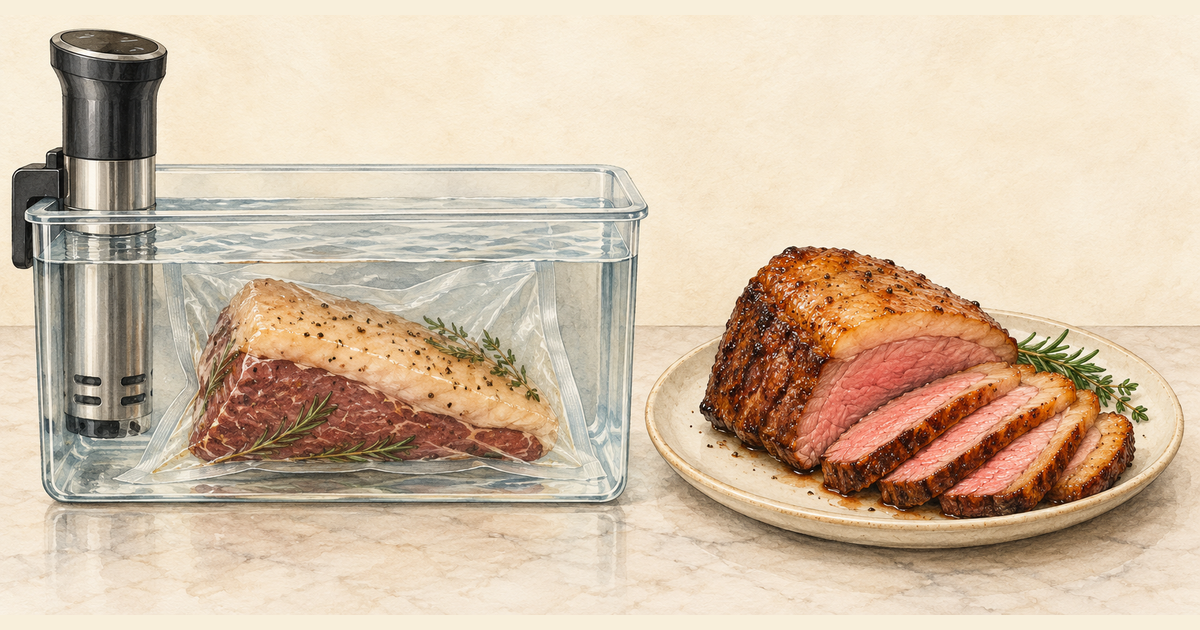
a compact roast with a broad outside layer of fat and a visible grain beneath it. It is a different cut from tri-tip. Keep the cap whole through the bath and the hot cooking step, then carve it for serving.
A long bath alone will not brown the fat; that happens against a pan or over controlled grill heat. Check the center as described in Cook safely before the final browning and rest.
Time and temperature
Swipe to see all columns
| Texture | Bath setting | Check before serving | Cook time |
|---|---|---|---|
| Whole Cap Roast | 131°F | 145°F | 3 hours |
One plain boneless whole picanha weighing 1–2 kg (about 2 1/4–4 1/2 pounds), with its fat cap attached and kept flat rather than rolled. The bath time alone cannot determine when its thick center is ready. Start timing when the bag enters the fully heated circulating bath. The listed time is the bath stage only; allow additional time for hotter cooking, browning, and the rest. Follow the thermometer check in Cook safely before serving.
Choose your texture
- 131°FWhole Cap Roast
- Thin slices of beef with a browned strip of outside fat.
Best for
- One plain boneless whole picanha weighing 1–2 kg (about 2 1/4–4 1/2 pounds), with its fat cap attached and kept flat rather than rolled. The bath time alone cannot determine when its thick center is ready.
Get it ready
- Ask for a plain boneless 1–2 kg (about 2 1/4–4 1/2 pound) whole picanha or sirloin cap with the outside fat attached. Confirm the cut rather than substituting tri-tip.
- Trim loose membrane and ragged edges. Note the muscle grain before seasoning so you can carve across it later.
- Season the surface and seal the refrigerator-cold whole cap flat in a food-safe bag. Do not fold it or roll it onto skewers.
- Fully submerge in the heated circulating bath, leave water moving around the pouch, and start timing when it goes in.
Finish and serve
- Use clean utensils to remove the meat from its bag and discard the liquid.
- Continue cooking in a skillet or oven until each thick center reaches 145°F. Check the thickest meat center of the whole cap from more than one direction, keeping the probe out of the fat cap, and repeat for each roast if cooking more than one. Recheck cooler areas before the final browning.
- Dry the roast well. Brown the fat side in a skillet, then the meat sides; on a grill, move away from flare-ups rather than letting the fat burn.
- Rest at least 3 minutes after the final heat before cutting. Follow the grain you noted earlier and cut thin slices across it. Keep the roast whole until after the rest and serve immediately.
Useful tips
- The fat cap sits outside the muscle; its thickness does not tell you how marbled the meat is.
- Let rendered fat drain away from direct flames during a grill finish.
- Cutting the raw roast into steaks changes its shape and cooking needs; use a steak-specific guide for that preparation.
Common problems
- The fat cap is rubbery
- The water bath warmed the fat without browning it. Give the fat side direct pan contact after the center has reached its temperature.
- The slices feel tough
- The knife followed the long muscle fibers. Turn the roast and carve thinly across the grain after resting.
Questions
QIs picanha the same as tri-tip?
QShould I remove the fat cap?
QCan I use this time for any size roast?
Cook safely
Use fully thawed, refrigerator-cold intact whole-muscle meat. This guide does not cover ground, injected, mechanically tenderized, cured, stuffed, or rolled meat.
Check the thickest meat center of the whole cap from more than one direction, keeping the probe out of the fat cap, and repeat for each roast if cooking more than one. Each measured spot must reach 145°F before the final browning.
If a spot is cooler, continue cooking in a skillet or oven and check again. This bath is below that temperature and needs a hotter cooking step; its timer alone cannot make the meat ready to eat.
Rest for at least 3 minutes after the last heat before cutting or serving. Use clean utensils, discard bag liquid, and serve immediately. These instructions do not cover chilling, storage, reheating, or hot holding.