Last updated
Overview
New York strip has a broad, fairly even steak shape, a firm bite, and a band of fat along one edge. It sits between lean tenderloin and a heavily marbled ribeye in richness.
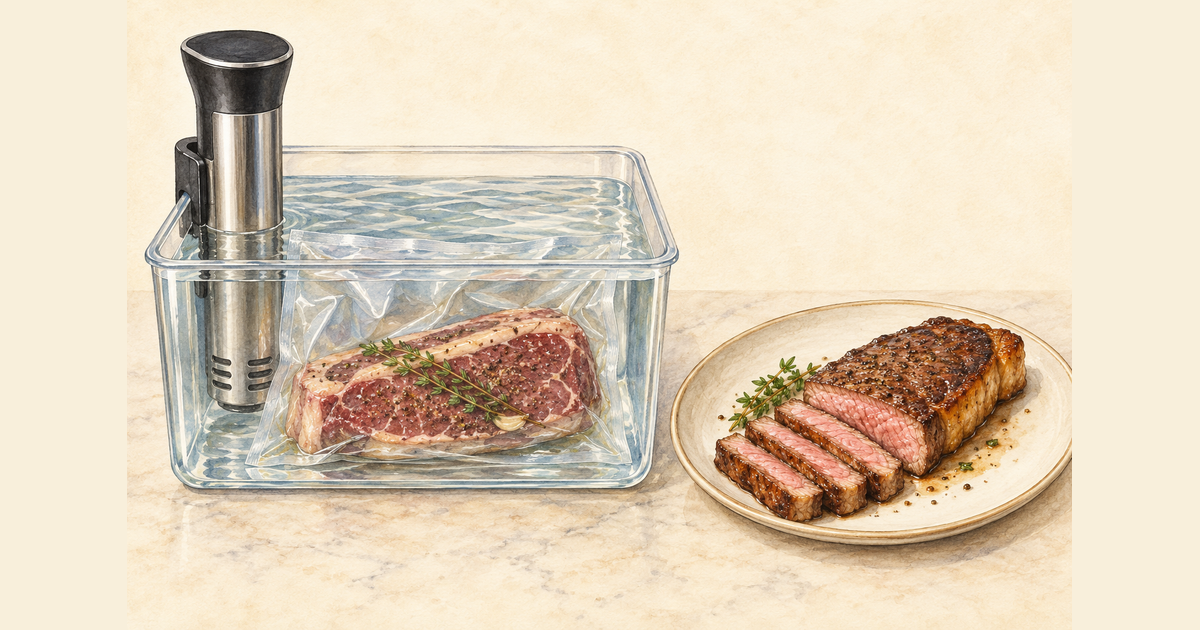
This guide covers an individual boneless strip steak, rather than a whole strip loin or a T-bone. The bath starts the cook; a skillet brings the center to the temperature in Cook safely before the final crust and rest.
Time and temperature
Swipe to see all columns
| Texture | Bath setting | Check before serving | Cook time |
|---|---|---|---|
| Seared Steak | 135°F | 145°F | 1–4 hours |
A boneless intact New York strip steak 1 1/2–2 inches thick, bagged alone without folding or overlap. Thinner steaks, bone-in steaks, and whole strip-loin roasts are outside this guide. Start timing when the bag enters the fully heated circulating bath. The listed time is the bath stage only; allow additional time for hotter cooking, browning, and the rest. Follow the thermometer check in Cook safely before serving.
Choose your texture
- 135°FSeared Steak
- A meaty, sliceable center with more chew than tenderloin and a browned fat edge.
Best for
- A boneless whole New York strip steak 1 1/2–2 inches thick, bagged alone without folding or overlap. Thinner steaks, bone-in steaks, and whole strip-loin roasts are outside this guide.
Get it ready
- Choose a boneless strip steak 1 1/2–2 inches thick and check that it has not been injected or mechanically tenderized.
- Trim tough connective tissue at the edge while leaving some outside fat for browning.
- Pat dry, season with salt and pepper, and seal each refrigerator-cold steak flat in its own food-safe bag.
- Fully submerge in the heated circulating bath with space around the bag. Start timing when the steak goes in and stay within the listed range.
Finish and serve
- Use clean utensils to remove the meat from its bag and discard the liquid.
- Continue cooking in a skillet or oven until each thick center reaches 145°F. Check the thickest center of each steak from the side, avoiding the fat edge, and check a second place where the steak is thicker. Recheck cooler areas before the final browning.
- Dry the steak, oil lightly, and brown both broad sides. Hold the steak securely with tongs to brown the fat edge as well.
- Rest at least 3 minutes after the final heat before cutting. Slice across the grain, keeping the browned fat edge attached where it is pleasant to eat, and serve immediately.
Useful tips
- A whole strip loin needs roast instructions; do not use this individual-steak timing.
- A wet surface steams in the pan, so dry both sides before browning.
Common problems
- The outside fat is pale and chewy
- The broad faces browned while the narrow fat edge never touched the skillet. Use tongs to bring the fat edge into contact with the hot pan.
- The steak is firmer than expected
- The hotter cooking after the bath raises the center above the bath setting. Expect the final doneness from the measured center temperature, and stop adding heat once the center and crust are ready.
Questions
QIs strip steak the same as sirloin?
QDoes this cover T-bone or porterhouse?
QWill the center stay at 135°F?
Cook safely
Use fully thawed, refrigerator-cold intact whole-muscle meat. This guide does not cover ground, injected, mechanically tenderized, cured, stuffed, or rolled meat.
Check the thickest center of each steak from the side, avoiding the fat edge, and check a second place where the steak is thicker. Each measured spot must reach 145°F before the final browning.
If a spot is cooler, continue cooking in a skillet or oven and check again. This bath is below that temperature and needs a hotter cooking step; its timer alone cannot make the meat ready to eat.
Rest for at least 3 minutes after the last heat before cutting or serving. Use clean utensils, discard bag liquid, and serve immediately. These instructions do not cover chilling, storage, reheating, or hot holding.