Back to Lamb
Last updated
Overview
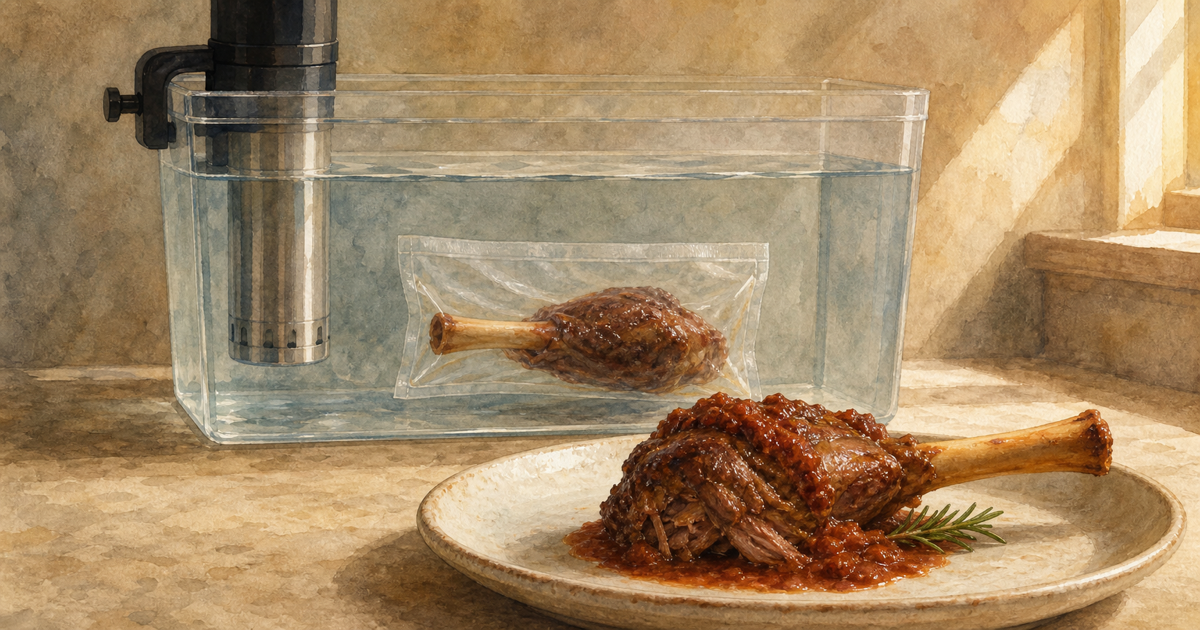
A long, gentle cook turns lamb shanks spoon-tender while the meat stays juicy. Finish them under the broiler with a glossy sauce and plenty of herbs.
Time and temperature
Swipe to see all columns
| Texture | Bath setting | Cook time | Longest time |
|---|---|---|---|
| Braise-Style | 170°–175°F | 18–24 hours | 48 hours |
| Fall-Apart | 180°–185°F | 24–30 hours | 48 hours |
Choose the time that matches the texture you want. Start timing when the bag goes into the fully heated water bath, and read the Cook safely section before serving.
Choose your texture
- 170°–175°FBraise-Style
- Spoon-tender meat that still holds together for plating.
Best for
- Whole shanks
Notes
- Brown shanks before or after the bath for flavor.
Tips
- Deglaze the searing pan with fresh stock plus red wine for a quick sauce.
- Keep every shank whole and untied so each piece can be checked directly.
- 180°–185°FFall-Apart
- Very soft lamb that pulls easily into ragu, tacos, or a rich sauce.
Best for
- Pulled lamb
- Ragu
Notes
- Use fresh stock when building a sauce for serving right away.
Tips
- Spread shredded lamb on a sheet pan before broiling to get crunchy bits evenly.
Get it ready
- Trim the excess fat, season the shanks, and add wine, stock, or herbs to the bag.
- Seal one shank per bag and protect any sharp bone ends from puncturing the plastic.
- Keep the bags fully submerged for the long cook.
Finish and serve
- Take the shanks out of the bag and pat them dry.
- Brush with sauce, then broil or torch until glossy and browned.
- Rest for at least 3 minutes, then serve with the warm sauce.
Useful tips
- Cook one shank per bag for the best results. Shanks in the same bag press against each other and cook unevenly at the contact points.
- Keep every shank whole and untied so each piece can be checked directly in its thickest part away from bone, fat, and gristle.
Questions
QBraise-Style: What sides pair best?
Creamy polenta, mashed potatoes, or couscous soak up the rich sauce beautifully.
QFall-Apart: What do I do with extra sauce at service?
Prepare only the amount needed from clean, separate ingredients after every shank passes; discard all juices in the bag.
Cook safely
Use the chart for timing, then check the thickest part of the lamb shank with a food thermometer. It should reach 145°F. Rest it for at least 3 minutes before slicing, and keep the cooked food away from raw juices.
If the meat is ground, injected, mechanically tenderized, rolled, or stuffed, follow the package directions or a guide written for that form.