Back to Eggs
Last updated
Overview
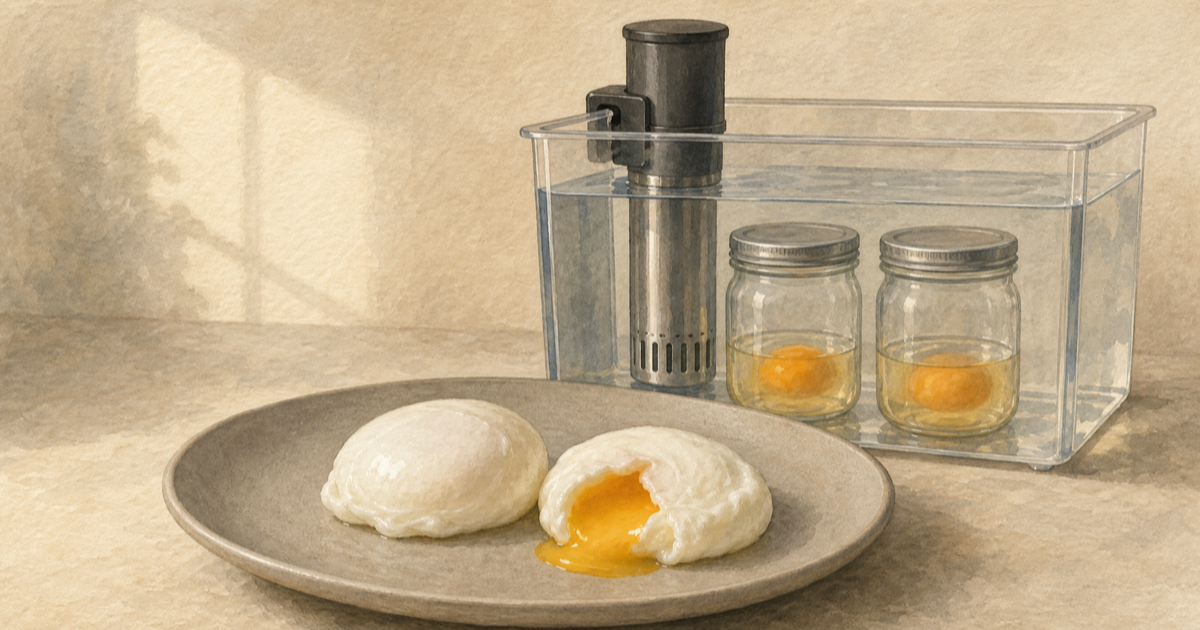
Shell-on poached eggs cook without swirling water or chasing wispy whites around a pot. Crack them gently onto toast, salads, or a warm grain bowl just before serving.
Time and temperature
Swipe to see all columns
| Texture | Bath setting | Cook time | Longest time |
|---|---|---|---|
| Liquid Yolk | 145°–147°F | 45 minutes–1 hour | 1 hour |
| Creamy Yolk | 147°–150°F | 45 minutes–1 hour | 1 hour |
| Jammy Yolk | 150°–155°F | 45 minutes–1 hour | 1 hour |
Egg size and starting temperature can change the timing. Start with cold eggs, and read the Cook safely section before serving.
Choose your texture
- 145°–147°FLiquid Yolk
- Barely set whites with a completely liquid, golden yolk.
Best for
- Eggs benedict
- Avocado toast
- Salads
Notes
- This is the classic poached egg texture
- Whites are just set enough to hold shape
- Yolk is completely liquid and flows beautifully
Tips
- The ice bath makes peeling easier and stops cooking
- Cook only the batch you will serve right away
- 147°–150°FCreamy Yolk
- Tender whites with a thick, creamy yolk.
Best for
- Breakfast bowls
- Grain bowls
- Ramen
Notes
- This is slightly firmer than classic poached eggs
- Yolk is thick and creamy rather than fully liquid
- Whites hold together better
Tips
- This temperature provides a good balance of liquid and creamy
- Easier to handle than 145°F eggs
- Great for bowls where eggs will be mixed in
- 150°–155°FJammy Yolk
- Firm whites with a jammy, fudgy yolk.
Best for
- Salads
- Immediate breakfast service
- Those who prefer firmer yolks
Notes
- This creates a soft-boiled egg texture
- Yolk is jammy and fudgy rather than liquid
- The firmer texture is easier to handle during immediate plating
Tips
- This temperature gives a firmer texture for serving right away
- Eggs are firm enough to move cleanly from the shell to the prepared plate
- Great for those who don't like liquid yolks
Get it ready
- Lower the cold eggs gently into the heated water bath, still in their shells.
- Keep the eggs below the waterline while they cook.
Cool and serve
- Lift the eggs from the water as soon as the cook time ends.
- Crack each egg gently and slip it onto toast, greens, or a warm grain bowl.
- Season and serve right away.
Useful tips
- Crack the egg into a fine mesh strainer before plating. This removes the loose, watery whites that create wispy strings. What drops through the strainer is the clean, tight white.
- Cook only the number of processor-pasteurized shell eggs you will plate when the cook time ends, then serve right away without a holding period.
- Add a splash of white vinegar to the water for traditional presentation, but with sous vide it is purely cosmetic — the eggs are already evenly shaped from the shell.
- Anti-tip: do not cook poached eggs above 149°F or the yolk sets fully and you lose the runny, golden pour that makes poached eggs special. The whole point is the liquid yolk.
Questions
QLiquid Yolk: How do I peel sous vide eggs?
Transfer cooked eggs to ice bath for 1–2 minutes, then peel gently underwater. The shells slip off easily.
QLiquid Yolk: Why are my egg whites so delicate?
At 145°–147°F, whites are just barely set. For firmer whites, try 150°–155°F.
QCreamy Yolk: What's the difference between 145°F and 147°F?
At 147°F, yolks are slightly thicker and creamier rather than totally liquid. Whites are a bit firmer too.
QJammy Yolk: Are 155°F eggs still considered poached?
They're more like soft-boiled eggs with jammy yolks. Still delicious and evenly cooked.
Cook safely
Use clean, uncracked shell eggs labeled pasteurized, and keep them refrigerated. These times control texture; they do not pasteurize regular shell eggs. Serve the eggs right away. Do not use this method for storage, meal prep, buffet service, or diners at higher risk from foodborne illness.