Back to Eggs
Last updated
Overview
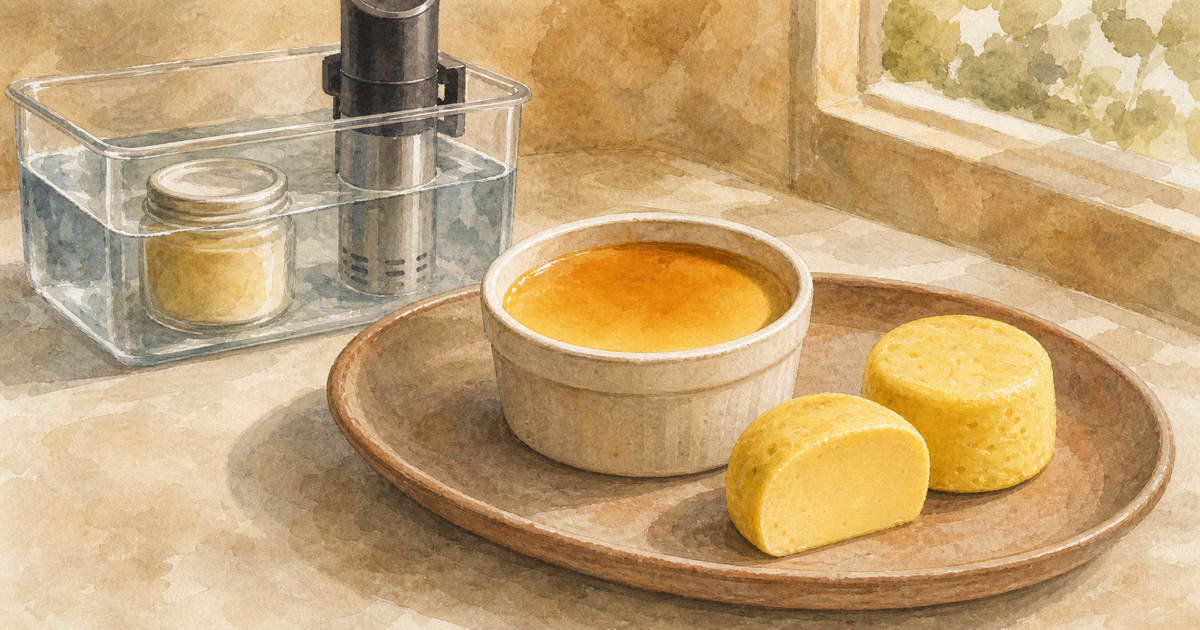
The water bath gives custard a gentle, even set. Use a lower temperature for a soft wobble or a higher one for a firmer custard that can be unmolded cleanly.
Time and temperature
Swipe to see all columns
| Texture | Bath setting | Cook time | Longest time |
|---|---|---|---|
| Soft Custard | 172°F | 1 hour | 3 hours |
| Firm | 176°F | 75 minutes | 3 hours |
Egg size and starting temperature can change the timing. Start with cold eggs, and read the Cook safely section before serving.
Choose your texture
- 172°FSoft Custard
- Barely set custard that trembles like crème brûlée.
Best for
- Crème brûlée
- Pots de crème
Notes
- Tap jars before cooking to remove bubbles.
- Chill completely before torching sugar tops.
Tips
- Strain the custard base through a fine sieve to remove any cooked egg bits.
- Skim any foam off the top before portioning so the surface stays glassy.
- After every jar measures 160°F at its center, cool the small jars right away without a fixed room-temperature delay.
- 176°FFirm
- Slightly firmer custard for unmolding or cheesecake jars.
Best for
- Cheesecake jars
- Egg bites
Notes
- Grease jars lightly for easier release.
- Chill overnight before unmolding.
Tips
- Run a thin spatula around the edge before unmolding for clean sides.
- Use silicone molds if you want evenly shaped egg bites or mini cheesecakes.
Get it ready
- Flavor the dairy with vanilla, spices, or citrus if you like, then strain it.
- Mix the custard and pour it into clean jars, ramekins, or molds.
- Skim away any foam, cover the containers, and keep them upright in the water bath.
Finish and serve
- Take the custards out of the bath and let them cool enough to handle.
- Serve warm, or chill until cold and set.
- Add the finishing garnish just before serving.
Useful tips
- Steep aromatics in the cream first. Vanilla beans, citrus zest, cinnamon sticks, or saffron threads need 15–20 minutes off-heat in warm cream to release their flavor compounds. Sous vide can't infuse aromatics in 1–2 hours the way a slow infusion does.
- Strain twice — once after combining the egg yolks with the cream, once before pouring into jars. The first strain catches any cooked egg from the temper; the second catches any solid bits from the aromatics. Two passes for true silk texture.
- Use 4-ounce Mason jars and don't fill past the shoulder. Custard needs space to set evenly without the center curdling, and overfilled jars cook unevenly. The shoulder line is roughly 80% full — that's your fill point.
- Anti-tip: don't try to unmold while warm. Even fully-set custards need a full overnight chill to firm up enough to invert without collapsing. Run a thin knife around the inside of the jar, then dip the bottom in hot water for 10 seconds before flipping.
Questions
QSoft Custard: Can I torch custard directly in jars?
Yes — just keep the flame moving so glass doesn’t overheat on one spot.
QSoft Custard: What mix-ins work?
Infuse the cream with citrus peel, vanilla bean, or tea before tempering the eggs.
QFirm: How do I prevent cracking when unmolding?
Dip only the outside bottom of the chilled jar in hot water for 10 seconds, then invert and tap gently. This brief release step does not qualify later hot service; serve the custard chilled.
QFirm: How long should firm custards chill before unmolding?
Chill covered at 40°F or below until fully set, if you like overnight, and keep total refrigerated use within 3–4 days after the thermometer reading and prompt cooling.
QFirm: What’s the best way to transport them?
Keep the right away cooled custards covered in their small jars at 40°F or below through transport, add toppings at chilled service, and keep total refrigerated use within 3–4 days.
Cook safely
Use pasteurized dairy and keep it refrigerated until you begin. Check the center of every jar or dish with a food thermometer; it should reach 160°F. If any one is cooler, keep cooking and check it again.
To save it for later, cool it from 135°–70°F within 2 hours and to 41°F or colder within 6 hours total, then refrigerate at 40°F or below for up to 3 to 4 days. Reheat hot portions to 165°F.