Last updated
Overview
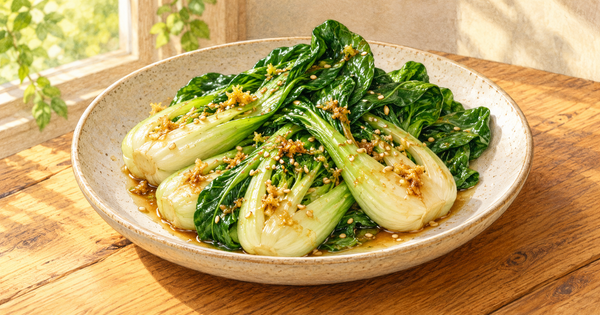
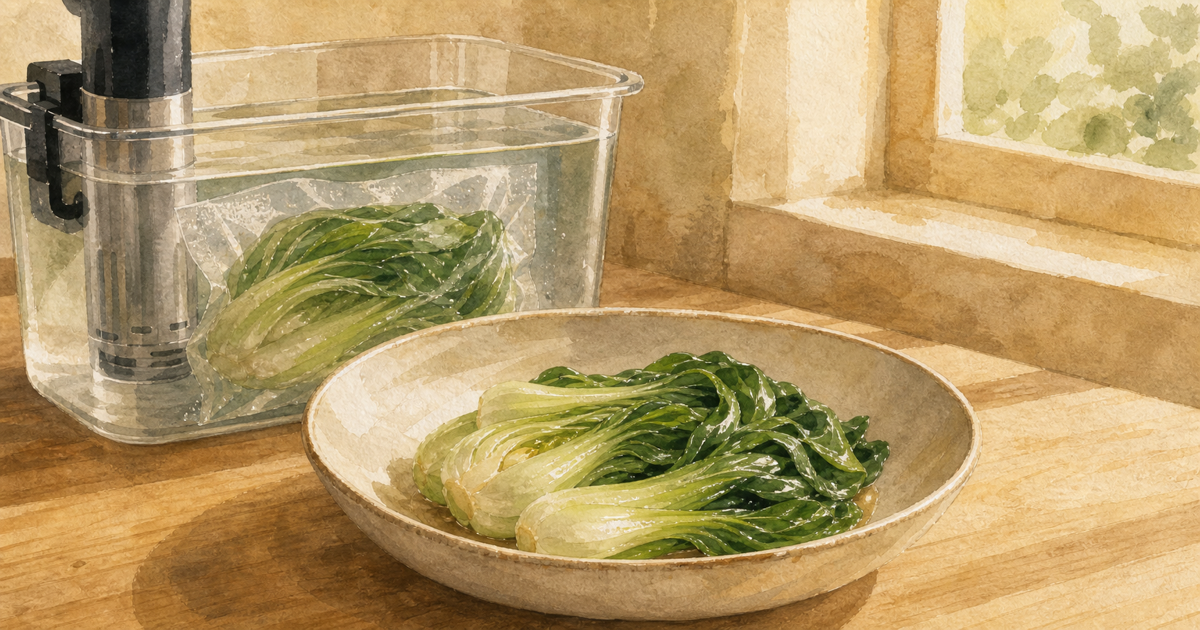
Bok choy and other Asian greens cook until the stems are tender and the leaves stay silky and bright. A quick toss with garlic, ginger, soy sauce, and sesame oil brings everything together.
Time and temperature
Swipe to see all columns
| Texture | Bath setting | Cook time | Longest time |
|---|---|---|---|
| Crisp-Tender | 180°–183°F | 20–40 minutes | 45 minutes |
| Tender | 183°–185°F | 30–40 minutes | 45 minutes |
Thicker pieces need the longer end of the cook time. Keep everything in one layer, and read the Cook safely section before serving.
Choose your texture
- 180°–183°FCrisp-Tender
- Stems remain crisp with a pleasant snap while leaves are tender and silky.
Best for
- Baby bok choy
- Choy sum
- Smaller Asian greens
Notes
- Cut larger bok choy in half lengthwise for even cooking
- Add aromatic oils or butter to the bag for flavor infusion
Tips
- Cut larger bok choy in half lengthwise so stems and leaves cook evenly
- Don't overcrowd the bag — greens need space for water circulation
- Add a tablespoon of oil to the bag to help conduct heat and prevent sticking
- 183°–185°FTender
- Stems are fully tender with no crunch, leaves are very soft and silky.
Best for
- Mature bok choy
- Gai lan (Chinese broccoli)
- Braised-style preparations
Notes
- Greens will be softer and more suitable for mixing into dishes rather than serving whole
- Good for adding to soups, congee, or noodle dishes
- Can be chopped after cooking without falling apart
Tips
- This softer texture works better for mixing into dishes than serving whole
- Good for traditional Chinese preparations where tender greens are expected
- Can be chopped after cooking for adding to fried rice or noodle dishes
Get it ready
- Rinse the greens well, especially between the stems and leaves, then pat them dry.
- Trim the tough base and halve or quarter larger heads lengthwise.
- Arrange in one layer with a little sesame or neutral oil, then seal gently.
Finish and serve
- Heat oil in a wok or large skillet, then add garlic and ginger for about 30 seconds.
- Add the greens and toss briefly with soy sauce and sesame oil.
- Finish with scallions, sesame seeds, or chile flakes and serve hot.
Useful tips
- Bok choy stems and leaves cook unevenly — the stems need more heat and time than the delicate leaves. Split them and bag separately, then combine on the plate. Stems get 183°F for 20 minutes, leaves get 5 minutes at the same temp.
- Add aromatics to the bag: a smashed garlic clove, a slice of ginger, a splash of soy sauce, a drizzle of sesame oil. The closed bag concentrates these flavors against the greens, giving you a one-bag stir-fry effect.
- Don't crowd the bag. Asian greens release water as they cook, and a crowded bag becomes a steamed mess. One head of bok choy per bag, max — and use a wide bag so the greens lay flat instead of bunching up.
- Sear the stems briefly after the bath. After 20 minutes at 183°F, drain the bag and toss the stems into a very hot wok for 30 seconds. You'll get char marks and a slightly smoky finish that takes the dish from steamed to restaurant-style.
- Anti-tip: don't sous vide gai lan or yu choi the same way as bok choy. Those varieties have tougher stems and need 30 minutes at 185°F. Bok choy is delicate by comparison. Adjust your time and temp for the specific green you're working with.
Questions
QCrisp-Tender: Should I cut bok choy before or after sous vide?
QCrisp-Tender: Can I cook different Asian greens together?
QCrisp-Tender: Why are my greens still wet after sous vide?
QTender: Will greens at 183°–185°F be mushy?
QTender: Can I use this temperature for all Asian greens?
QTender: How do I keep the bright green color at higher temperatures?
Cook safely
Wash your hands for at least 20 seconds, then rinse the vegetables under running water. Do not use soap on produce. Keep it away from raw meat and seafood, use clean tools, and serve it right after cooking. These times are for texture; they are not instructions for canning, sealed storage, chilling, or reheating. Never leave a sealed bag at room temperature.
Cook with this guide
Recipes using this guide
Each recipe inherits a reviewed bath setting and cook time from the Asian Greens (Bok Choy) guide.