Back to Duck
Last updated
Overview
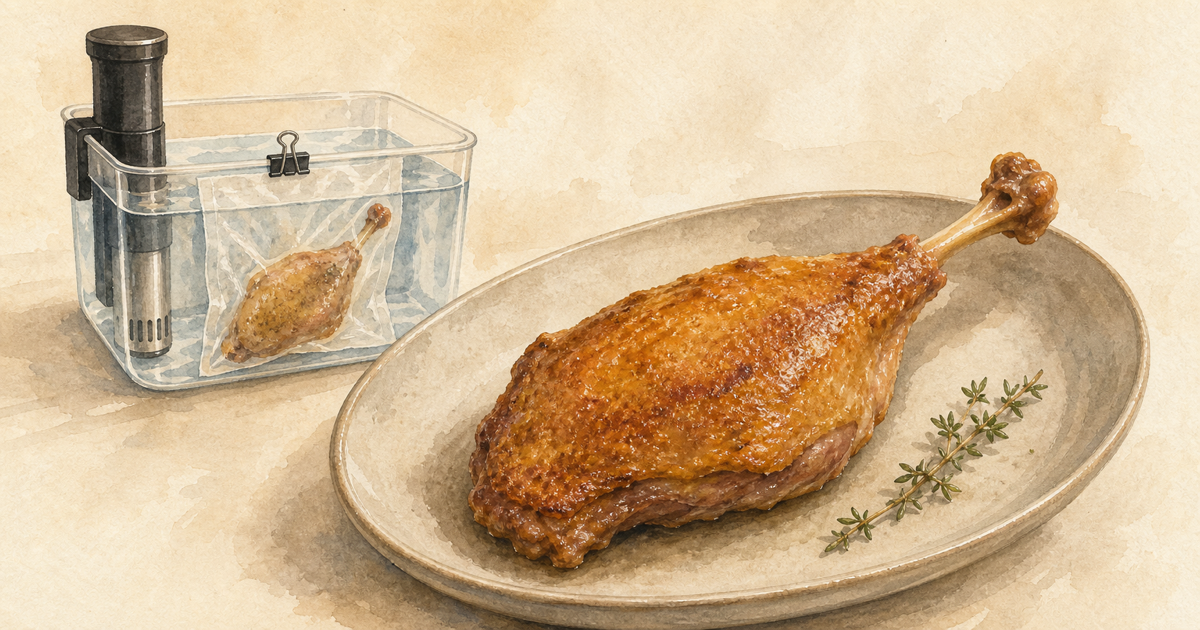
A long cook softens duck legs and melts the connective tissue into a silky confit texture. Crisp the skin in a hot pan or oven just before serving.
Time and temperature
Swipe to see all columns
| Texture | Bath setting | Cook time |
|---|---|---|
| Tender & Sliceable | 160°–165°F | 8–10 hours |
| Classic Confit | 167°–172°F | 10–12 hours |
| Pulled Duck | 175°–180°F | 12–14 hours |
Choose the time that matches the texture you want. Start timing when the bag goes into the fully heated water bath, and read the Cook safely section before serving.
Choose your texture
- 160°–165°FTender & Sliceable
- Tender duck that stays whole for serving and slices cleanly.
Best for
- Plated entrées
- Duck cassoulet
Notes
- Finish under a broiler to blister the skin before serving.
- Use the rendered fat for roasted potatoes.
Tips
- Pat the legs completely dry before broiling so the skin blisters instead of steaming.
- Rest cooked legs on a rack to keep the underside crisp.
- Reserve the rendered fat for pommes Anna or roasted vegetables.
- 167°–172°FClassic Confit
- Silky duck that pulls easily from the bone and crisps well.
Best for
- Duck confit
Notes
- Shred into salads with frisée, lardons, and mustard vinaigrette.
Tips
- For salads, crisp the skin separately and crumble over the greens to keep it crunchy.
- Use the gelatin-rich bag juices to mount pan sauces or enrich soups.
- 175°–180°FPulled Duck
- Very soft duck that shreds for tacos, bao, or noodle bowls.
Best for
- Duck tacos
- Bao
- Ramen
Notes
- Shred, toss with hoisin or BBQ sauce, and broil for crispy bits.
Tips
- Shred while piping hot so collagen doesn’t seize; use gloves to protect your hands.
- Spread meat in an even layer before broiling to maximize crispy bits.
- Add a splash of the bag juices or stock after crisping to keep meat succulent.
Get it ready
- Season the duck legs with salt, pepper, and herbs.
- Seal each leg in its own food-safe bag.
- Keep the bags fully submerged for the long cook.
Finish and serve
- Take the legs out of the bags and pat the skin completely dry.
- Broil, roast, or sear skin-side down until the skin is browned and crisp.
- Simmer the bag juices into a glaze or sauce, then serve.
Useful tips
- Duck legs are built for confit. The high collagen content in the thigh and drumstick breaks down beautifully at 160°–170°F over 10–14 hours, giving you fall-off-the-bone meat that traditional confit takes days to achieve.
- Cook the legs skin-on in the bag. After the bath, pat dry and sear skin-side down in a hot skillet for 3–4 minutes. The skin should be glass-crispy — this is the whole point of duck confit.
- Duck leg bag juices are essentially concentrated duck stock. Strain, skim the fat (save it!), and reduce for a finishing sauce or add to soups and risottos.
- For shredded duck, cook at 175°–180°F for 14+ hours. The meat pulls apart effortlessly and works beautifully in ragu, fried rice, or lettuce wraps.
- Continue cooking as needed, then check every piece at 165°F in its thickest area with a food thermometer, avoiding bone. Continue cooking and recheck any piece below 165°F, then serve every piece immediately.
Cook safely
Use the bath time for texture, then use a food thermometer before serving. Check the thickest part of every piece of duck, away from the bone. Every spot should reach 165°F. If any spot is cooler, keep cooking and check it again. Use clean plates and utensils, and keep cooked poultry away from raw juices.