Last updated
Overview
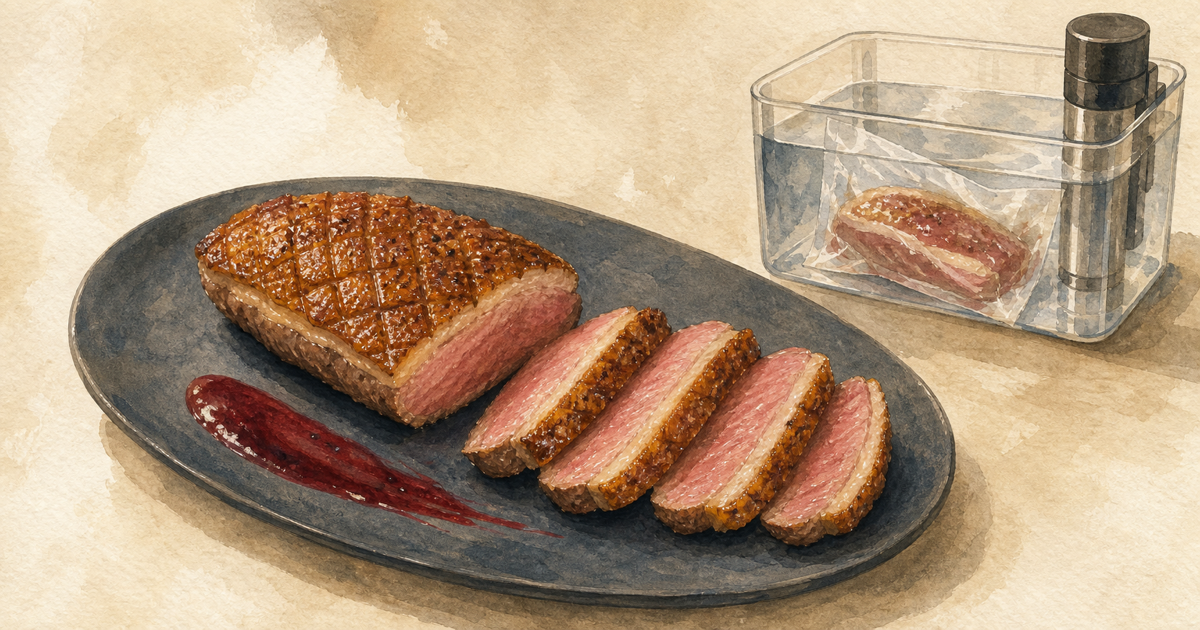
Duck breast cooks gently before the skin goes into a skillet for slow, even browning. Render the fat until the skin is crisp, then slice the rosy meat and add a bright fruit sauce if you like.
Time and temperature
Swipe to see all columns
| Texture | Bath setting | Cook time |
|---|---|---|
| Medium-Rare | 136°–140°F | 2 hours 30 minutes–7 hours |
| Medium | 141°–145°F | 2 hours |
| Confit-Style | 150°–155°F | 4 hours |
Choose the time that matches the texture you want. Start timing when the bag goes into the fully heated water bath, and read the Cook safely section before serving.
Choose your texture
- 136°–140°FMedium-Rare
- Rosy, juicy duck with a well-rendered fat cap and crisp skin.
Best for
- Mallard
- Moulard
- Domestic duck
Notes
- Finish skin-side down in a skillet until deeply golden.
Tips
- Score only the fat, not the meat, to prevent juices from escaping during the bath.
- Render skin slowly over medium heat before finishing with a quick blast for blistered texture.
- Spoon off rendered duck fat as you sear and save it for potatoes or confit.
- 141°–145°FMedium
- A firmer center with less pink and crisp, well-rendered skin.
Best for
- Sharing plates
- Guests who prefer less pink duck
Notes
- Brush with honey + soy before searing for lacquer.
- Slice against the grain to keep bite tender.
Tips
- Render the fat cap slowly to avoid burning sugars in your glaze.
- Keep the finished breast skin-side up while it rests so steam does not soften the crust.
- Keep a spoon nearby to baste with rendered fat for extra flavor.
- 150°–155°FConfit-Style
- Very tender duck that can be shredded and crisped like confit.
Best for
- Duck tacos
- Steamed bao
Notes
- Shred, then crisp in its rendered fat for tacos or hash.
- Use bag juices to emulsify sauces.
Tips
- For tacos, crisp shredded duck in a dry skillet to render more fat and build texture before saucing.
- Skim fat from the bag juices, then reduce the gelatin-rich liquid into a glaze.
Get it ready
- Score the skin and fat in a shallow crosshatch without cutting into the meat.
- Season both sides of each breast.
- Seal each breast in its own food-safe bag.
Finish and serve
- Take the duck out of the bag and pat the skin completely dry.
- Set it skin-side down in a warm skillet and cook until the fat renders and the skin turns crisp.
- Give the meat side a brief sear, then slice and serve with sauce or the reduced bag juices.
Useful tips
- For the finishing sear, place the scored breast skin-side down in a cold skillet, then turn the heat to medium. The slow render over 5–6 minutes crisps the fat cap without overcooking the lean meat underneath.
- Score the skin in a tight crosshatch pattern, cutting through the fat but not into the meat. This allows the thick fat layer to render evenly instead of staying rubbery.
- Rendered duck fat is prized in French cooking. Spoon it off during the finishing sear and use it for potatoes or vegetables served with the duck.
- Anti-tip: do not sear duck breast over high heat like a steak. The thick fat cap needs slow, gentle rendering. High heat chars the outside while the fat stays raw and rubbery underneath.
Cook safely
Use the bath time for texture, then use a food thermometer before serving. Check the thickest part of every piece of duck, away from the bone. Every spot should reach 165°F. If any spot is cooler, keep cooking and check it again. Use clean plates and utensils, and keep cooked poultry away from raw juices.