Last updated
Overview
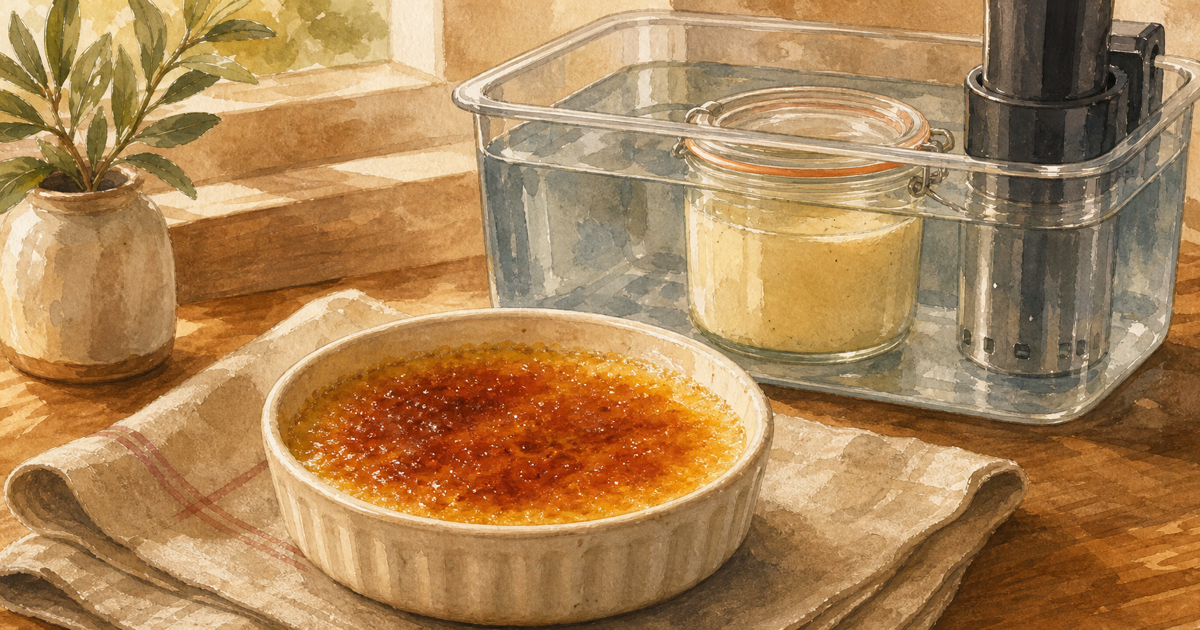
Creme brulee cooks gently in small jars, giving the custard a smooth center without a hot oven. Chill it well, then add the sugar and torch the top just before serving.
Time and temperature
Swipe to see all columns
| Texture | Bath setting | Check before serving | Cook time | Longest time |
|---|---|---|---|---|
| Silky | 176°F | 160°F | 1 hour | 2 hours |
| Slightly Firm | 179°F | 160°F | 75 minutes | 2 hours |
Choose the time that matches the texture you want. Start timing when the bag goes into the fully heated water bath, and read the Cook safely section before serving.
Choose your texture
- 176°FSilky
- Classic crème brûlée wobble with barely-set center.
Best for
- Crème brûlée
- Pots de crème
Notes
- Tap jars before cooking to remove bubbles.
- Chill completely before torching sugar tops.
Tips
- Skim any foam off the custard base before portioning to keep the surface smooth.
- Use shallow dishes for faster setting and a higher caramel-to-custard ratio.
- After chilling, leave uncovered in the fridge for 30 minutes to prevent condensation before torching.
- 179°FSlightly Firm
- Custard that holds shape for unmolding or brûlée bars.
Best for
- Custard bars
- Travel-friendly desserts
Notes
- Let custards cool completely before unmolding.
- Finish with fruit or brittle instead of sugar crust if serving on the go.
Tips
- Grease molds lightly and run a thin knife around the edge before unmolding.
- Chill overnight for the cleanest slices; the custard firms as it rests.
- If transporting, skip the sugar crust and top with brittle or toasted nuts instead.
Get it ready
- Strain the custard and skim away any foam.
- Pour it into clean, shallow jars or ramekins.
- Wipe the rims and close the lids fingertip-tight.
- Keep the jars upright with the water above the custard line.
Finish and serve
- Take the jars out of the bath and let them cool enough to handle.
- Chill until completely cold and set.
- Sprinkle with sugar and torch until the top is crisp and amber.
Useful tips
- Use only dairy products explicitly labeled as made with pasteurized milk, keep them at 40°F or below until preparation, and use clean hands, utensils, jars, and work surfaces.
- Straining supports a silky texture but is not an temperature.
- A uniform jiggle or wobble is a quality observation only; use the thermometer measurement for the temperature.
Questions
QSilky: Can I bake crème brûlée without a water bath?
QSlightly Firm: How do I unmold without cracks?
QSlightly Firm: What toppings travel well?
Cook safely
Use pasteurized dairy and keep it refrigerated until you begin. Check the center of every custard with a food thermometer; it should reach 160°F. If any one is cooler, keep cooking and check it again.
To save it for later, cool it from 135°–70°F within 2 hours and to 41°F or colder within 6 hours total, then refrigerate at 40°F or below for up to 3 to 4 days. Reheat hot portions to 165°F.