Last updated
Overview
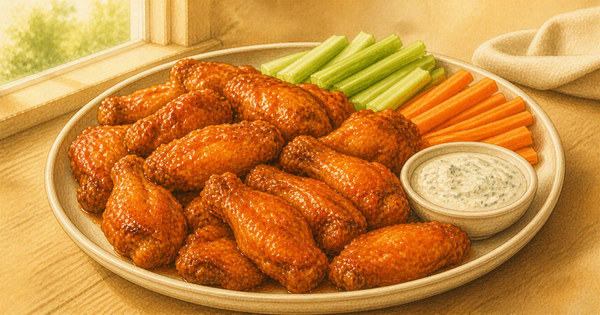
Sous vide makes chicken wings tender all the way to the bone. Pat them very dry, then use a hot oven, broiler, or grill to turn the skin crisp before adding sauce.
Time and temperature
Swipe to see all columns
| Texture | Bath setting | Check before serving | Cook time |
|---|---|---|---|
| Tender | 160°–165°F | 165°F | 1 hour 30 minutes–2 hours |
| Traditional | 165°–170°F | 165°F | 1 hour 30 minutes–2 hours |
| Fall-Off-the-Bone | 170°–175°F | 165°F | 2 hours–2 hours 30 minutes |
Choose the time that matches the texture you want. Start timing when the bag goes into the fully heated water bath, and read the Cook safely section before serving.
Choose your texture
- 160°–165°FTender
- Tender meat with skin ready to turn crisp in the oven or broiler.
Best for
- Party wings
- Buffalo wings
- Sauced wings
Notes
- This is the best range for chicken wings
- Fat renders completely during the sous vide stage
- Finishing step creates the essential crispy skin
Tips
- Dry brine for 1–4 hours and add baking powder for the crispiest skin
- Pat wings completely dry after removing from bags
- Don't overcrowd the baking sheet — wings need space to crisp
- Finish at high heat (450°F) for maximum crispness
- 165°–170°FTraditional
- Very tender meat that pulls easily from the bone.
Best for
- Familiar firm texture
- Extra-tender preferences
Notes
- This creates very tender wings
- Fat is completely rendered
Tips
- This temperature helps produce a very tender texture
- Still requires high-heat finishing for crispy skin
- Great for conservative diners
- 170°–175°FFall-Off-the-Bone
- The softest option, with meat that slips from the bone.
Best for
- Those who prefer very tender wings
- Boneless-style texture
Notes
- This creates an almost boneless texture
- Some may find it too tender
Tips
- This is a matter of preference — some love it, others find it too soft
- The crispy skin provides essential textural contrast
- Handle gently as meat is very delicate
Get it ready
- Separate the wings into flats and drumettes, then pat them dry.
- Toss with 1/2 teaspoon baking powder for every 3 pounds of wings if you want extra-crisp skin.
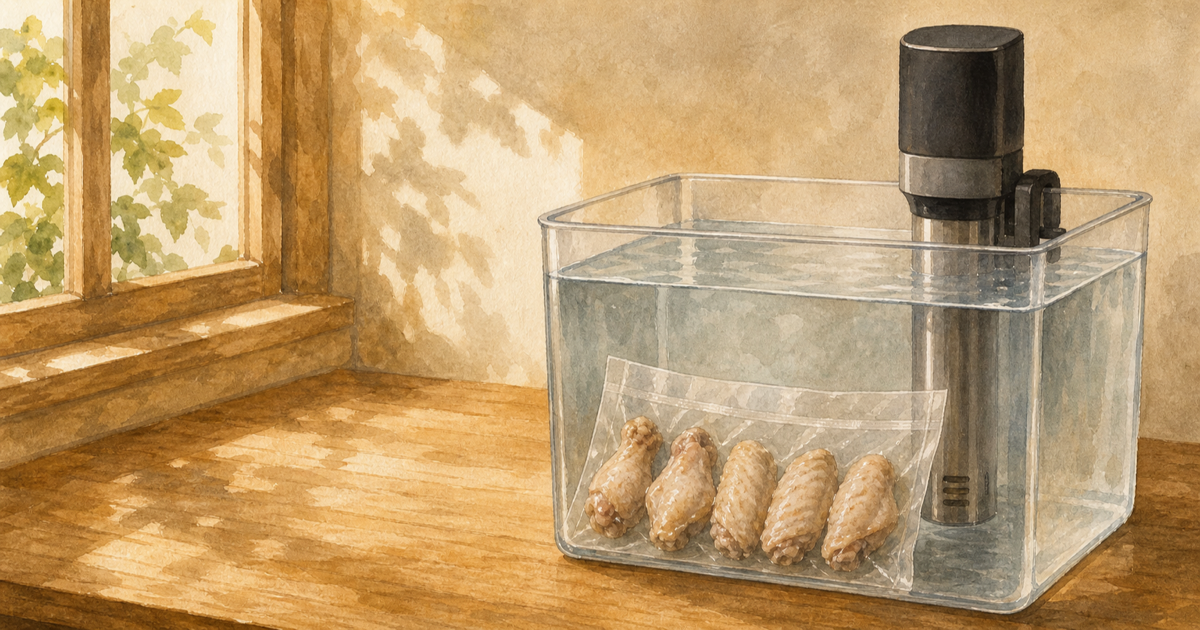
- Arrange the wings in one flat layer in food-safe bags, then seal.
- Keep the bags fully submerged while the wings cook.
Finish and serve
- Take the wings out of the bags and pat them completely dry.
- Roast at 450°F for 15–20 minutes, flipping halfway through, until golden and crisp.
- Use a food thermometer at the thickest part of every wing, avoiding bone. Every piece must reach 165°F; keep cooking and recheck any cooler piece.
- Toss with sauce or dry seasoning, then serve right away.
Useful tips
- Baking powder is the key weapon. Toss the wings with 1/2 teaspoon per 3 pounds before bagging. The baking powder raises the skin pH, which promotes Maillard browning during the high-heat finish. The result is noticeably crispier skin with less time under the broiler.
- Dry the wings aggressively between the bath and the oven. Pat with paper towels, then if you like let them sit uncovered on a wire rack for 10–15 minutes. Moisture is the enemy of crispiness. Every drop of surface water that remains will steam instead of brown, leaving you with rubbery patches.
- Sauce AFTER crisping, never before. Sugary sauces (Buffalo, teriyaki, honey-garlic) burn under a broiler. Crisp the wings first, then toss in sauce immediately after they come out. The residual heat caramelizes the sauce on contact, and the hot skin absorbs it. For dry rubs, apply half before cooking and half after crisping.
- Anti-tip: do not overcrowd the baking sheet. Wings need space between them so hot air circulates and the skin crisps evenly. Overlapping wings steam each other and you end up with a pile of soggy skin. Use two sheet pans if needed. The extra dish is worth it.
- Continue cooking as needed, then check every piece at 165°F in its thickest area with a food thermometer, avoiding bone. Continue cooking and recheck any piece below 165°F, then serve every piece immediately.
Cook safely
Use the bath time for texture, then use a food thermometer before serving. Check the thickest part of every piece of chicken, away from the bone. Every spot should reach 165°F. If any spot is cooler, keep cooking and check it again. Use clean plates and utensils, and keep cooked poultry away from raw juices.
Cook with this guide
Recipes using this guide
Each recipe inherits a reviewed bath setting and cook time from the Chicken Wings guide.