Back to Chicken
Last updated
Overview
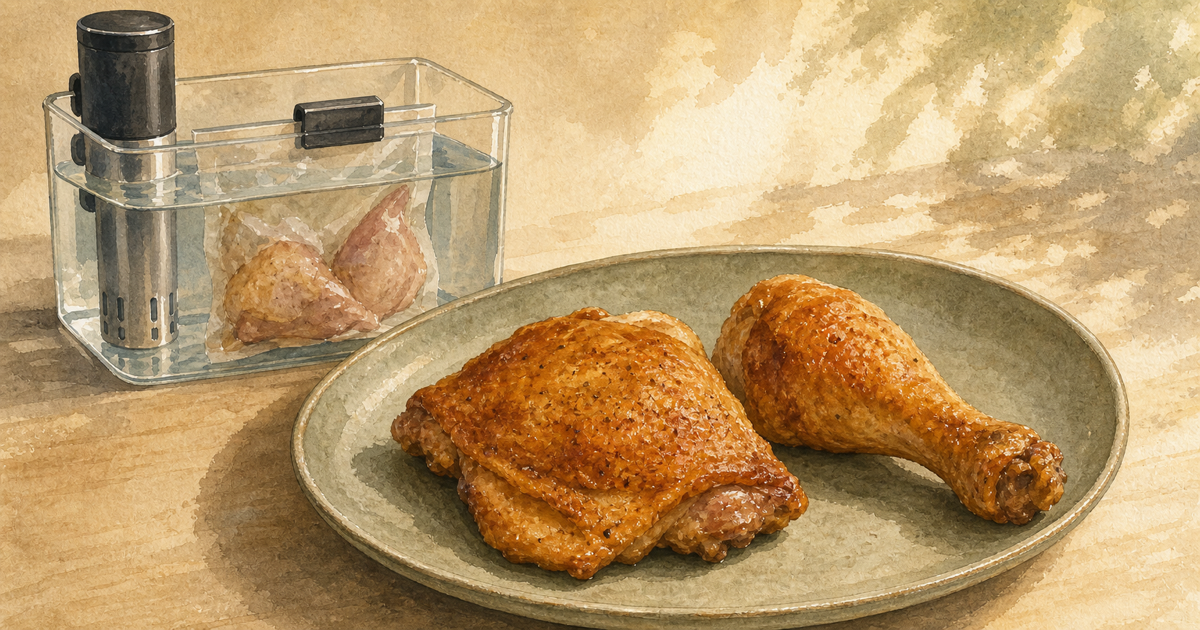
Chicken thighs and legs can stay juicy enough to slice or cook longer until the meat pulls from the bone. A quick broil, grill, or skillet finish turns the skin crisp.
Time and temperature
Swipe to see all columns
| Texture | Bath setting | Cook time |
|---|---|---|
| Sliceable | 160°–165°F | 6 hours |
| Confit | 167°–170°F | 8 hours |
| Shredded | 175°–178°F | 10 hours |
Choose the time that matches the texture you want. Start timing when the bag goes into the fully heated water bath, and read the Cook safely section before serving.
Choose your texture
- 160°–165°FSliceable
- Juicy thighs that hold together for carving.
Best for
- Bone-in thighs
- Drumsticks
Notes
- Broil skin-side up for 5 minutes to crisp.
- Use bag juices to toss with vegetables.
Tips
- Pat the skin completely dry before broiling so it bubbles instead of steaming.
- Use bone-in thighs for the juiciest results — the bones buffer heat and keep the interior tender.
- Strain bag juices, reduce with white wine, and mount with butter for an instant pan sauce.
- 167°–170°FConfit
- Silky, very tender dark meat that pulls easily from the bone.
Best for
- Bowls
Notes
- Shred and crisp in a skillet for tacos or bowls.
Tips
- For tacos, crisp shredded meat in a dry skillet before saucing to keep texture lively.
- If you want to serve whole, broil skin-side up until blistered and sprinkle with flaky salt.
- 175°–178°FShredded
- Very tender dark meat that pulls into easy shreds.
Best for
- Tacos
Notes
- Shred hot, toss with sauce, broil for crispy bits.
- Portion into containers with juices for easy reheats.
Tips
- Shred while still hot — once it cools, the fat re-solidifies and shredding gets stringy.
- Broil shredded meat in a single layer to get crispy bits before saucing.
- Freeze flat in resealable bags with juices so you can break off portions for quick meals.
Get it ready
- Season with salt and your favorite spices.
- Add garlic, herbs, or citrus if you like.
- Seal the dark-meat pieces, or remove the air by water displacement before closing a zip-top bag.
- Make sure the bag stays fully submerged while the food cooks.
Finish and serve
- Open the bags and move the food to a plate.
- Pat every piece completely dry with paper towels.
- Broil, roast, or grill skin-side up until browned and crisp.
- For pulled options, shred and broil on a sheet tray until edges crisp.
- Serve right away.
Useful tips
- Dark meat is more forgiving than breast because the higher fat and collagen content insulates the muscle fibers. That means you have a wider window before texture degrades. A thigh at 162°F for 6 hours and a thigh at 162°F for 8 hours taste nearly identical, which is not true of lean breast meat.
- Always cook dark meat bone-in and skin-on when possible. The bone acts as a heat buffer that keeps the interior juicier, and the skin protects the surface from the water bath. You can remove the skin after cooking if you prefer, but cooking without it sacrifices moisture.
- The single biggest improvement you can make to dark meat is drying the skin completely before crisping. After the bath, pat with paper towels, then let the pieces sit uncovered on a rack for 5 minutes. The drier the skin, the faster it crisps, and the less time under heat means the interior stays at your target doneness.
- Bag juices from dark meat are liquid gold. Strain them, reduce by half with a splash of wine or vinegar, and mount with a knob of butter. You now have a pan sauce that took 30 seconds of actual work and tastes like it took an hour.
- Choose the lower quality option for sliceable pieces and the higher quality option for shreddable texture.
- Continue cooking as needed, then check every piece at 165°F in its thickest area with a food thermometer, avoiding bone. Continue cooking and recheck any piece below 165°F, then serve every piece immediately.
Cook safely
Use the bath time for texture, then use a food thermometer before serving. Check the thickest part of every piece of chicken, away from the bone. Every spot should reach 165°F. If any spot is cooler, keep cooking and check it again. Use clean plates and utensils, and keep cooked poultry away from raw juices.